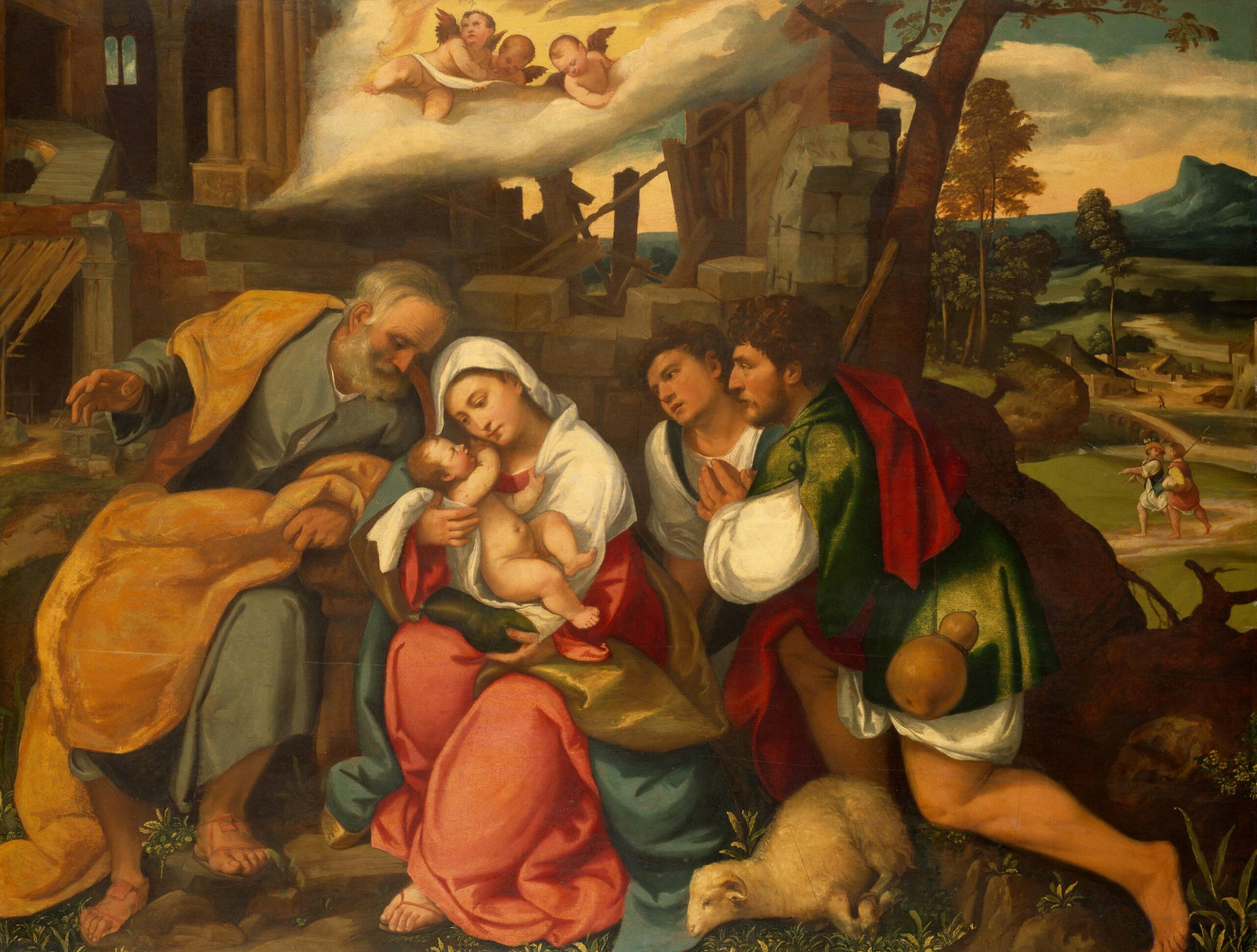
First Sunday of Advent
Liturgical Color: Violet
Rosary Mysteries: Glorious Mysteries

Daily Readings
First Reading: Isaiah 2:1-5
1 This is what Isaiah, son of Amoz, saw concerning Judah and Jerusalem.
Zion, the Royal City of God
2 In days to come,
The mountain of the LORD’s house
shall be established as the highest mountain
and raised above the hills.
All nations shall stream toward it.a
3 Many peoples shall come and say:
“Come, let us go up to the LORD’s mountain,
to the house of the God of Jacob,
That he may instruct us in his ways,
and we may walk in his paths.”
For from Zion shall go forth instruction,
and the word of the LORD from Jerusalem.
4 He shall judge between the nations,
and set terms for many peoples.
They shall beat their swords into plowshares
and their spears into pruning hooks;
One nation shall not raise the sword against another,
nor shall they train for war again.
5 House of Jacob, come,
let us walk in the light of the LORD!
1 Verbum quod vidit Isaias, filius Amos, super Juda et Jerusalem.
2 [Et erit in novissimis diebus:
præparatus mons domus Domini
in vertice montium,
et elevabitur super colles;
et fluent ad eum omnes gentes,
3 et ibunt populi multi, et dicent:
Venite, et ascendamus ad montem Domini,
et ad domum Dei Jacob;
et docebit nos vias suas,
et ambulabimus in semitis ejus,
quia de Sion exibit lex,
et verbum Domini de Jerusalem.
4 Et judicabit gentes,
et arguet populos multos;
et conflabunt gladios suos in vomeres,
et lanceas suas in falces.
Non levabit gens contra gentem gladium,
nec exercebuntur ultra ad prælium.
5 Domus Jacob, venite,
et ambulemus in lumine Domini.]
Second Reading: Romans 13: 11-14
11 And do this because you know the time; it is the hour now for you to awake from sleep. For our salvation is nearer now than when we first believed;
12 the night is advanced, the day is at hand. Let us then throw off the works of darkness (and) put on the armor of light;
13 let us conduct ourselves properly as in the day, not in orgies and drunkenness, not in promiscuity and licentiousness, not in rivalry and jealousy.
14 But put on the Lord Jesus Christ, and make no provision for the desires of the flesh.
11 Et hoc scientes tempus: quia hora est jam nos de somno surgere. Nunc enim propior est nostra salus, quam cum credidimus.
12 Nox præcessit, dies autem appropinquavit. Abjiciamus ergo opera tenebrarum, et induamur arma lucis.
13 Sicut in die honeste ambulemus: non in comessationibus, et ebrietatibus, non in cubilibus, et impudicitiis, non in contentione, et æmulatione:
14 sed induamini Dominum Jesum Christum, et carnis curam ne feceritis in desideriis.
Gospel: Matthew 24: 37-44
37 For as it was in the days of Noah, so it will be at the coming of the Son of Man.
38 In (those) days before the flood, they were eating and drinking, marrying and giving in marriage, up to the day that Noah entered the ark.
39 They did not know until the flood came and carried them all away. So will it be (also) at the coming of the Son of Man.
40 Two men will be out in the field; one will be taken, and one will be left.
41 Two women will be grinding at the mill; one will be taken, and one will be left.
42 Therefore, stay awake! For you do not know on which day your Lord will come.
43 Be sure of this: if the master of the house had known the hour of night when the thief was coming, he would have stayed awake and not let his house be broken into.
44 So too, you also must be prepared, for at an hour you do not expect, the Son of Man will come.
37 Sicut autem in diebus Noë, ita erit et adventus Filii hominis:
38 sicut enim erant in diebus ante diluvium comedentes et bibentes, nubentes et nuptum tradentes, usque ad eum diem, quo intravit Noë in arcam,
39 et non cognoverunt donec venit diluvium, et tulit omnes: ita erit et adventus Filii hominis.
40 Tunc duo erunt in agro: unus assumetur, et unus relinquetur.
41 Duæ molentes in mola: una assumetur, et una relinquetur.
42 Vigilate ergo, quia nescitis qua hora Dominus vester venturus sit.
43 Illud autem scitote, quoniam si sciret paterfamilias qua hora fur venturus esset, vigilaret utique, et non sineret perfodi domum suam.
44 Ideo et vos estote parati: quia qua nescitis hora Filius hominis venturus est.

A Daily Question from the Summa Theologica
Whether men are predestined by God? (Article 1 of 8 of Question 23. OF PREDESTINATION from the Treatise on The One God)
Objection 1: It seems that men are not predestined by God, for Damascene says (De Fide Orth. ii, 30): “It must be borne in mind that God foreknows but does not predetermine everything, since He foreknows all that is in us, but does not predetermine it all.” But human merit and demerit are in us, forasmuch as we are the masters of our own acts by free will. All that pertains therefore to merit or demerit is not predestined by God; and thus man’s predestination is done away.
Objection 2: Further, all creatures are directed to their end by divine providence, as was said above (Q[22], AA[1],2). But other creatures are not said to be predestined by God. Therefore neither are men.
Objection 3: Further, the angels are capable of beatitude, as well as men. But predestination is not suitable to angels, since in them there never was any unhappiness (miseria); for predestination, as Augustine says (De praedest. sanct. 17), is the “purpose to take pity [miserendi]” [*See Q[22], A[3]]. Therefore men are not predestined.
Objection 4: Further, the benefits God confers upon men are revealed by the Holy Ghost to holy men according to the saying of the Apostle (1 Cor. 2:12): “Now we have received not the spirit of this world, but the Spirit that is of God: that we may know the things that are given us from God.” Therefore if man were predestined by God, since predestination is a benefit from God, his predestination would be made known to each predestined; which is clearly false.
On the contrary, It is written (Rom. 8:30): “Whom He predestined, them He also called.”
I answer that, It is fitting that God should predestine men. For all things are subject to His providence, as was shown above (Q[22], A[2]). Now it belongs to providence to direct things towards their end, as was also said (Q[22], AA[1],2). The end towards which created things are directed by God is twofold; one which exceeds all proportion and faculty of created nature; and this end is life eternal, that consists in seeing God which is above the nature of every creature, as shown above (Q[12], A[4]). The other end, however, is proportionate to created nature, to which end created being can attain according to the power of its nature. Now if a thing cannot attain to something by the power of its nature, it must be directed thereto by another; thus, an arrow is directed by the archer towards a mark. Hence, properly speaking, a rational creature, capable of eternal life, is led towards it, directed, as it were, by God. The reason of that direction pre-exists in God; as in Him is the type of the order of all things towards an end, which we proved above to be providence. Now the type in the mind of the doer of something to be done, is a kind of pre-existence in him of the thing to be done. Hence the type of the aforesaid direction of a rational creature towards the end of life eternal is called predestination. For to destine, is to direct or send. Thus it is clear that predestination, as regards its objects, is a part of providence.
Reply to Objection 1: Damascene calls predestination an imposition of necessity, after the manner of natural things which are predetermined towards one end. This is clear from his adding: “He does not will malice, nor does He compel virtue.” Whence predestination is not excluded by Him.
Reply to Objection 2: Irrational creatures are not capable of that end which exceeds the faculty of human nature. Whence they cannot be properly said to be predestined; although improperly the term is used in respect of any other end.
Reply to Objection 3: Predestination applies to angels, just as it does to men, although they have never been unhappy. For movement does not take its species from the term “wherefrom” but from the term “whereto.” Because it matters nothing, in respect of the notion of making white, whether he who is made white was before black, yellow or red. Likewise it matters nothing in respect of the notion of predestination whether one is predestined to life eternal from the state of misery or not. Although it may be said that every conferring of good above that which is due pertains to mercy; as was shown previously (Q[21], AA[3],4).
Reply to Objection 4: Even if by a special privilege their predestination were revealed to some, it is not fitting that it should be revealed to everyone; because, if so, those who were not predestined would despair; and security would beget negligence in the predestined.
Continue reading the rest of the articles on Sacred Texts Archive website.
Scripture texts in this work are taken from the New American Bible, revised edition © 2010, 1991, 1986, 1970 Confraternity of Christian Doctrine, Washington, D.C.