Advent weekday
Liturgical Color: Violet
Rosary Mysteries: Sorrowful Mysteries

Daily Readings
First Reading: Isaiah 11:1-10
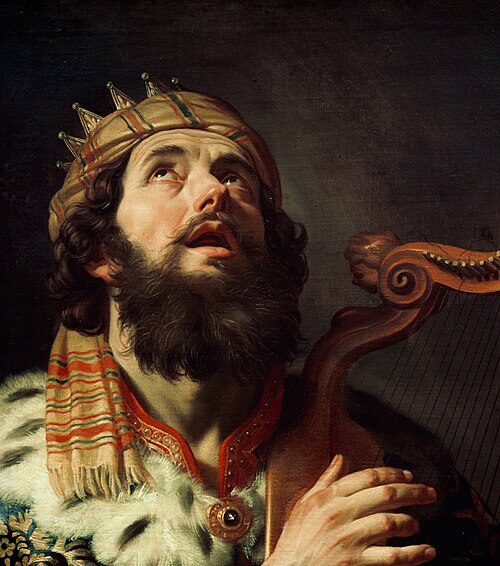
The Ideal Davidic King
1 But a shoot shall sprout from the stump of Jesse,
and from his roots a bud shall blossom.
2 The spirit of the LORD shall rest upon him:
a spirit of wisdom and of understanding,
A spirit of counsel and of strength,
a spirit of knowledge and of fear of the LORD,
3 and his delight shall be the fear of the LORD.
Not by appearance shall he judge,
nor by hearsay shall he decide,
4 But he shall judge the poor with justice,
and decide fairly for the land’s afflicted.
He shall strike the ruthless with the rod of his mouth,
and with the breath of his lips he shall slay the wicked.
5 Justice shall be the band around his waist,
and faithfulness a belt upon his hips.
6 Then the wolf shall be a guest of the lamb,
and the leopard shall lie down with the young goat;
The calf and the young lion shall browse together,
with a little child to guide them.
7 The cow and the bear shall graze,
together their young shall lie down;
the lion shall eat hay like the ox.
8 The baby shall play by the viper’s den,
and the child lay his hand on the adder’s lair.
9 They shall not harm or destroy on all my holy mountain;
for the earth shall be filled with knowledge of the LORD,
as water covers the sea.
Restoration
10 On that day,
The root of Jesse,
set up as a signal for the peoples—
Him the nations will seek out;
his dwelling shall be glorious.
1 [Et egredietur virga de radice Jesse,
et flos de radice ejus ascendet.
2 Et requiescet super eum spiritus Domini:
spiritus sapientiæ et intellectus,
spiritus consilii et fortitudinis,
spiritus scientiæ et pietatis;
3 et replebit eum spiritus timoris Domini.
Non secundum visionem oculorum judicabit,
neque secundum auditum aurium arguet;
4 sed judicabit in justitia pauperes,
et arguet in æquitate pro mansuetis terræ;
et percutiet terram virga oris sui,
et spiritu labiorum suorum interficiet impium.
5 Et erit justitia cingulum lumborum ejus,
et fides cinctorium renum ejus.
6 Habitabit lupus cum agno,
et pardus cum hædo accubabit;
vitulus, et leo, et ovis, simul morabuntur,
et puer parvulus minabit eos.
7 Vitulus et ursus pascentur,
simul requiescent catuli eorum;
et leo quasi bos comedet paleas.
8 Et delectabitur infans ab ubere super foramine aspidis;
et in caverna reguli
qui ablactatus fuerit manum suam mittet.
9 Non nocebunt, et non occident
in universo monte sancto meo,
quia repleta est terra scientia Domini, sicut aquæ maris operientes.]
10 [In die illa radix Jesse,
qui stat in signum populorum,
ipsum gentes deprecabuntur,
et erit sepulchrum ejus gloriosum.
Gospel: Luke 10: 21-24
Praise of the Father
21 At that very moment he rejoiced [in] the holy Spirit and said, “I give you praise, Father, Lord of heaven and earth, for although you have hidden these things from the wise and the learned you have revealed them to the childlike. Yes, Father, such has been your gracious will.
22 All things have been handed over to me by my Father. No one knows who the Son is except the Father, and who the Father is except the Son and anyone to whom the Son wishes to reveal him.”
The Privileges of Discipleship
23 Turning to the disciples in private he said, “Blessed are the eyes that see what you see.
24 For I say to you, many prophets and kings desired to see what you see, but did not see it, and to hear what you hear, but did not hear it.”
21 In ipsa hora exsultavit Spiritu Sancto, et dixit: Confiteor tibi Pater, Domine cæli et terræ, quod abscondisti hæc a sapientibus et prudentibus, et revelasti ea parvulis. Etiam Pater: quoniam sic placuit ante te.
22 Omnia mihi tradita sunt a Patre meo. Et nemo scit quis sit Filius, nisi Pater: et quis sit Pater, nisi Filius, et cui voluerit Filius revelare.
23 Et conversus ad discipulos suos, dixit: Beati oculi qui vident quæ vos videtis.
24 Dico enim vobis quod multi prophetæ et reges voluerunt videre quæ vos videtis, et non viderunt: et audire quæ auditis, et non audierunt.

A Daily Question from the Summa Theologica
Whether the predestined are chosen by God? (Article 4 of 8 of Question 23. OF PREDESTINATION from the Treatise on The One God)
Objection 1: It seems that the predestined are not chosen by God. For Dionysius says (Div. Nom. iv, 1) that as the corporeal sun sends his rays upon all without selection, so does God His goodness. But the goodness of God is communicated to some in an especial manner through a participation of grace and glory. Therefore God without any selection communicates His grace and glory; and this belongs to predestination.
Objection 2: Further, election is of things that exist. But predestination from all eternity is also of things which do not exist. Therefore, some are predestined without election.
Objection 3: Further, election implies some discrimination. Now God “wills all men to be saved” (1 Tim. 2:4). Therefore, predestination which ordains men towards eternal salvation, is without election.
On the contrary, It is said (Eph. 1:4): “He chose us in Him before the foundation of the world.”
I answer that, Predestination presupposes election in the order of reason; and election presupposes love. The reason of this is that predestination, as stated above (A[1]), is a part of providence. Now providence, as also prudence, is the plan existing in the intellect directing the ordering of some things towards an end; as was proved above (Q[22], A[2]). But nothing is directed towards an end unless the will for that end already exists. Whence the predestination of some to eternal salvation presupposes, in the order of reason, that God wills their salvation; and to this belong both election and love:—love, inasmuch as He wills them this particular good of eternal salvation; since to love is to wish well to anyone, as stated above (Q[20], AA[2],3):—election, inasmuch as He wills this good to some in preference to others; since He reprobates some, as stated above (A[3]). Election and love, however, are differently ordered in God, and in ourselves: because in us the will in loving does not cause good, but we are incited to love by the good which already exists; and therefore we choose someone to love, and so election in us precedes love. In God, however, it is the reverse. For His will, by which in loving He wishes good to someone, is the cause of that good possessed by some in preference to others. Thus it is clear that love precedes election in the order of reason, and election precedes predestination. Whence all the predestinate are objects of election and love.
Reply to Objection 1: If the communication of the divine goodness in general be considered, God communicates His goodness without election; inasmuch as there is nothing which does not in some way share in His goodness, as we said above (Q[6], A[4]). But if we consider the communication of this or that particular good, He does not allot it without election; since He gives certain goods to some men, which He does not give to others. Thus in the conferring of grace and glory election is implied.
Reply to Objection 2: When the will of the person choosing is incited to make a choice by the good already pre-existing in the object chosen, the choice must needs be of those things which already exist, as happens in our choice. In God it is otherwise; as was said above (Q[20], A[2]). Thus, as Augustine says (De Verb. Ap. Serm. 11): “Those are chosen by God, who do not exist; yet He does not err in His choice.”
Reply to Objection 3: God wills all men to be saved by His antecedent will, which is to will not simply but relatively; and not by His consequent will, which is to will simply.
Continue reading the rest of the articles on Sacred Texts Archive website.
Scripture texts in this work are taken from the New American Bible, revised edition © 2010, 1991, 1986, 1970 Confraternity of Christian Doctrine, Washington, D.C.