Advent Weekday
Liturgical Color: Violet
Rosary Mysteries: Sorrowful Mysteries

Daily Readings
First Reading: Zephaniah 3:1-2, 9-13
III. Jerusalem Reproached
1 Ah! Rebellious and polluted,
the tyrannical city!
2 It listens to no voice,
accepts no correction;
In the LORD it has not trusted,
nor drawn near to its God.
9 For then I will make pure
the speech of the peoples,
That they all may call upon the name of the LORD,
to serve him with one accord;
10 From beyond the rivers of Ethiopia
and as far as the recesses of the North,
they shall bring me offerings.
11 On that day
You will not be ashamed
of all your deeds,
when you rebelled against me;
For then I will remove from your midst
the proud braggarts,
And you shall no longer exalt yourself
on my holy mountain.
12 But I will leave as a remnant in your midst
a people humble and lowly,
Who shall take refuge in the name of the LORD—
13 the remnant of Israel.
They shall do no wrong
and speak no lies;
Nor shall there be found in their mouths
a deceitful tongue;
They shall pasture and lie down
with none to disturb them.
1 [Væ provocatrix, et redempta civitas, columba!
2 non audivit vocem,
et non suscepit disciplinam;
in Domino non est confisa,
ad Deum suum non appropinquavit.
9 [Quia tunc reddam populis labium electum,
ut invocent omnes in nomine Domini,
et serviant ei humero uno.
10 Ultra flumina Æthiopiæ, inde supplices mei;
filii dispersorum meorum deferent munus mihi.
11 In die illa non confunderis super cunctis adinventionibus tuis,
quibus prævaricata es in me,
quia tunc auferam de medio tui magniloquos superbiæ tuæ,
et non adjicies exaltari amplius in monte sancto meo.
12 Et derelinquam in medio tui populum pauperem et egenum:
et sperabunt in nomine Domini.
13 Reliquiæ Israël non facient iniquitatem,
nec loquentur mendacium,
et non invenietur in ore eorum lingua dolosa,
quoniam ipsi pascentur, et accubabunt,
et non erit qui exterreat.
Gospel: Matthew 21:28-32
The Parable of the Two Sons
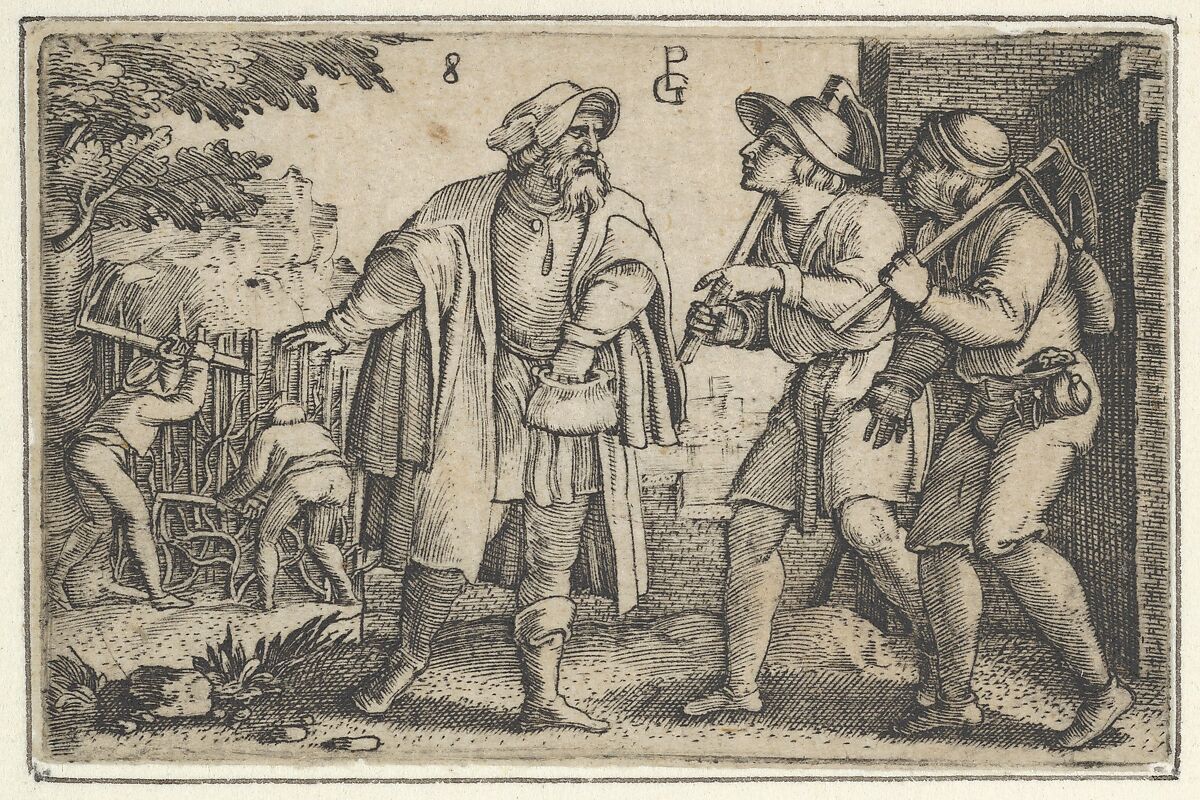
28 “What is your opinion? A man had two sons. He came to the first and said, ‘Son, go out and work in the vineyard today.’
29 He said in reply, ‘I will not,’ but afterwards he changed his mind and went.
30 The man came to the other son and gave the same order. He said in reply, ‘Yes, sir,’ but did not go.
31 Which of the two did his father’s will?” They answered, “The first.” Jesus said to them, “Amen, I say to you, tax collectors and prostitutes are entering the kingdom of God before you.
32 When John came to you in the way of righteousness, you did not believe him; but tax collectors and prostitutes did. Yet even when you saw that, you did not later change your minds and believe him.
28 Quid autem vobis videtur? Homo quidam habebat duos filios, et accedens ad primum, dixit: Fili, vade hodie, operare in vinea mea.
29 Ille autem respondens, ait: Nolo. Postea autem, pœnitentia motus, abiit.
30 Accedens autem ad alterum, dixit similiter. At ille respondens, ait: Eo, domine, et non ivit:
31 quis ex duobus fecit voluntatem patris? Dicunt ei: Primus. Dicit illis Jesus: Amen dico vobis, quia publicani et meretrices præcedent vos in regnum Dei.
32 Venit enim ad vos Joannes in via justitiæ, et non credidistis ei: publicani autem et meretrices crediderunt ei: vos autem videntes nec pœnitentiam habuistis postea, ut crederetis ei.

A Daily Question from the Summa Theologica
Whether grace was given in the baptism of John? (Article 3 of 6 of Question 38. Of the Baptism of John from the Treatise on the Incarnation)
Objection 1: It would seem that grace was given in the baptism of John. For it is written (Mk. 1:4): “John was in the desert baptizing and preaching the baptism of penance unto remission of sins.” But penance and remission of sins are the effect of grace. Therefore the baptism of John conferred grace.
Objection 2: Further, those who were about to be baptized by John “confessed their sins,” as related Mat. 3:6 and Mk. 1:5. But the confession of sins is ordered to their remission, which is effected by grace. Therefore grace was conferred in the baptism of John.
Objection 3: Further, the baptism of John was more akin than circumcision to the baptism of Christ. But original sin was remitted through circumcision: because, as Bede says (Hom. x in Circumcis.), “under the Law, circumcision brought the same saving aid to heal the wound of original sin as baptism is wont to bring now that grace is revealed.” Much more, therefore, did the baptism of John effect the remission of sins, which cannot be accomplished without grace.
On the contrary, It is written (Mat. 3:11): “I indeed baptize you in water unto penance.” Which words Gregory thus expounds in a certain homily (Hom. vii in Evang.): “John baptized, not in the Spirit, but in water: because he could not forgive sins.” But grace is given by the Holy Ghost, and by means thereof sins are taken away. Therefore the baptism of John did not confer grace.
I answer that, As stated above (A[2], ad 2), the whole teaching and work of John was in preparation for Christ: just as it is the duty of the servant and of the under-craftsman to prepare the matter for the form which is accomplished by the head-craftsman. Now grace was to be conferred on men through Christ, according to Jn. 1:17: “Grace and truth came through Jesus Christ.” Therefore the baptism of John did not confer grace, but only prepared the way for grace; and this in three ways: first, by John’s teaching, which led men to faith in Christ; secondly, by accustoming men to the rite of Christ’s baptism; thirdly, by penance, preparing men to receive the effect of Christ’s baptism.
Reply to Objection 1: In these words, as Bede says (on Mk. 1:4), a twofold baptism of penance may be understood. one is that which John conferred by baptizing, which is called “a baptism of penance,” etc., by reason of its inducing men to do penance, and of its being a kind of protestation by which men avowed their purpose of doing penance. The other is the baptism of Christ, by which sins are remitted, and which John could not give, but only preach, saying: “He will baptize you in the Holy Ghost.”
Or it may be said that he preached the “baptism of penance,” i.e. which induced men to do penance, which penance leads men on to “the remission of sins.”
Or again, it may be said with Jerome [*Another author on Mk. 1 (inter op. Hier.)] that “by the baptism of Christ grace is given, by which sins are remitted gratis; and that what is accomplished by the bridegroom is begun by the bridesman,” i.e. by John. Consequently it is said that “he baptized and preached the baptism of penance unto remission of sins,” not as though he accomplished this himself, but because he began it by preparing the way for it.
Reply to Objection 2: That confession of sins was not made unto the remission of sins, to be realized immediately through the baptism of John, but to be obtained through subsequent penance and through the baptism of Christ, for which that penance was a preparation.
Reply to Objection 3: Circumcision was instituted as a remedy for original sin. Whereas the baptism of John was not instituted for this purpose, but was merely in preparation for the baptism of Christ, as stated above; whereas the sacraments attain their effect through the force of their institution.
Continue reading the rest of the articles on Sacred Texts Archive website.
Scripture texts in this work are taken from the New American Bible, revised edition © 2010, 1991, 1986, 1970 Confraternity of Christian Doctrine, Washington, D.C.