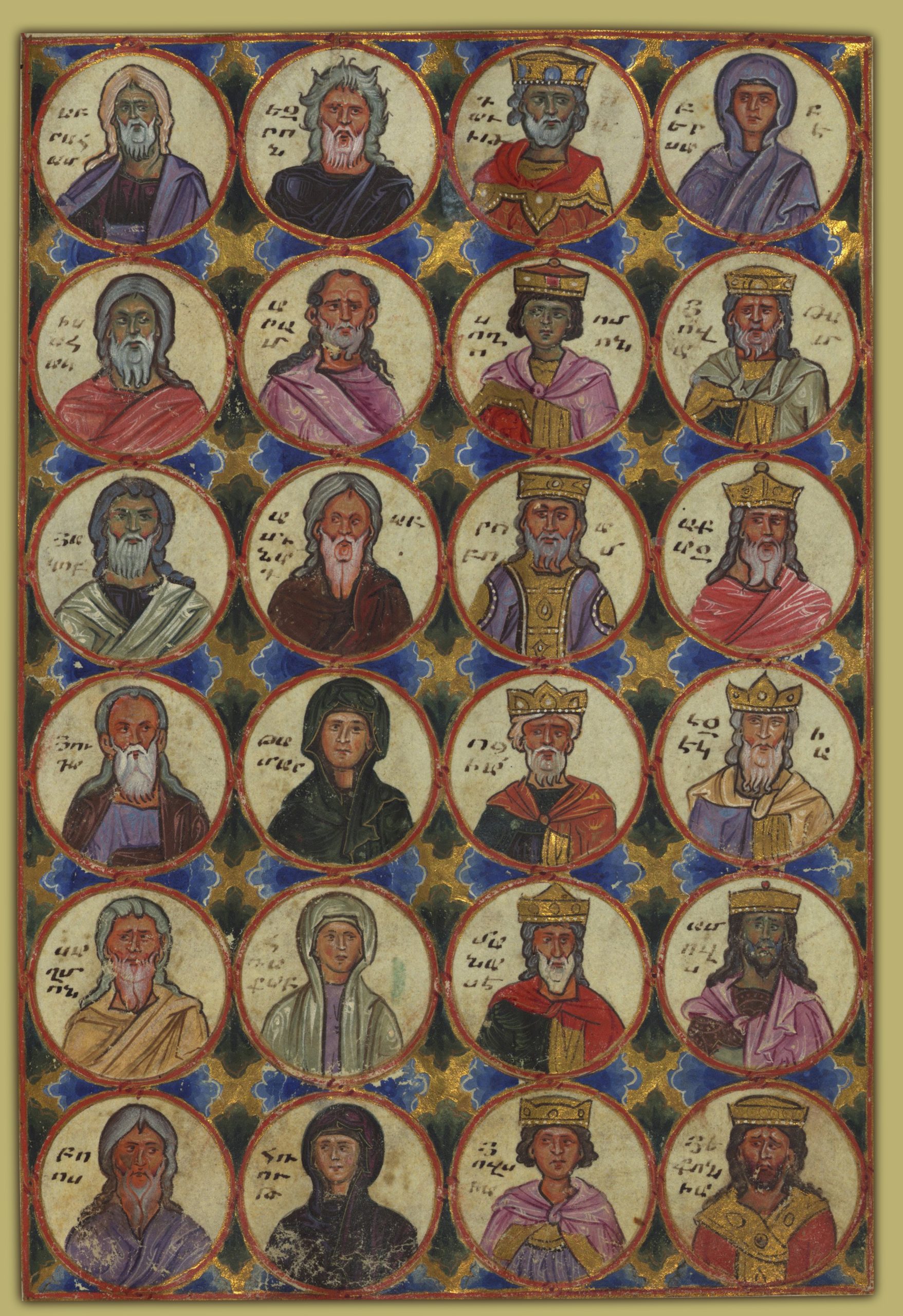
Advent Weekday
Liturgical Color: Violet
Rosary Mysteries: Glorious Mysteries

Daily Readings
First Reading: Genesis 49:2, 8-10
2 “Assemble and listen, sons of Jacob,
listen to Israel, your father.
8 “You, Judah, shall your brothers praise
—your hand on the neck of your enemies;
the sons of your father shall bow down to you.
9 Judah is a lion’s cub,
you have grown up on prey, my son.
He crouches, lies down like a lion,
like a lioness—who would dare rouse him?
10 The scepter shall never depart from Judah,
or the mace from between his feet,
Until tribute comes to him,
and he receives the people’s obedience.
2 [Congregamini, et audite, filii Jacob,
audite Israël patrem vestrum:
8 Juda, te laudabunt fratres tui:
manus tua in cervicibus inimicorum tuorum,
adorabunt te filii patris tui.
9 Catulus leonis Juda:
ad prædam, fili mi, ascendisti:
requiescens accubuisti ut leo,
et quasi leæna: quis suscitabit eum?
10 Non auferetur sceptrum de Juda,
et dux de femore ejus,
donec veniat qui mittendus est,
et ipse erit expectatio gentium.
Gospel: Matthew 1:1-17
The Genealogy of Jesus
1 The book of the genealogy of Jesus Christ, the son of David, the son of Abraham.
2 Abraham became the father of Isaac, Isaac the father of Jacob, Jacob the father of Judah and his brothers.
3 Judah became the father of Perez and Zerah, whose mother was Tamar Perez became the father of Hezron, Hezron the father of Ram,
4 Ram the father of Amminadab. Amminadab became the father of Nahshon, Nahshon the father of Salmon,
5 Salmon the father of Boaz, whose mother was Rahab. Boaz became the father of Obed, whose mother was Ruth. Obed became the father of Jesse,
6 Jesse the father of David the king.
David became the father of Solomon, whose mother had been the wife of Uriah.
7 Solomon became the father of Rehoboam, Rehoboam the father of Abijah, Abijah the father of Asaph.
8 Asaph became the father of Jehoshaphat, Jehoshaphat the father of Joram, Joram the father of Uzziah.
9 Uzziah became the father of Jotham, Jotham the father of Ahaz, Ahaz the father of Hezekiah.
10 Hezekiah became the father of Manasseh, Manasseh the father of Amos, Amos the father of Josiah.
11 Josiah became the father of Jechoniah and his brothers at the time of the Babylonian exile.
12 After the Babylonian exile, Jechoniah became the father of Shealtiel, Shealtiel the father of Zerubbabel,
13 Zerubbabel the father of Abiud. Abiud became the father of Eliakim, Eliakim the father of Azor,
14 Azor the father of Zadok. Zadok became the father of Achim, Achim the father of Eliud,
15 Eliud the father of Eleazar. Eleazar became the father of Matthan, Matthan the father of Jacob,
16 Jacob the father of Joseph, the husband of Mary. Of her was born Jesus who is called the Messiah.
17 Thus the total number of generations from Abraham to David is fourteen generations; from David to the Babylonian exile, fourteen generations; from the Babylonian exile to the Messiah, fourteen generations.
1 Liber generationis Jesu Christi filii David, filii Abraham.
2 Abraham genuit Isaac. Isaac autem genuit Jacob. Jacob autem genuit Judam, et fratres ejus.
3 Judas autem genuit Phares, et Zaram de Thamar. Phares autem genuit Esron. Esron autem genuit Aram.
4 Aram autem genuit Aminadab. Aminadab autem genuit Naasson. Naasson autem genuit Salmon.
5 Salmon autem genuit Booz de Rahab. Booz autem genuit Obed ex Ruth. Obed autem genuit Jesse. Jesse autem genuit David regem.
6 David autem rex genuit Salomonem ex ea quæ fuit Uriæ.
7 Salomon autem genuit Roboam. Roboam autem genuit Abiam. Abias autem genuit Asa.
8 Asa autem genuit Josophat. Josophat autem genuit Joram. Joram autem genuit Oziam.
9 Ozias autem genuit Joatham. Joatham autem genuit Achaz. Achaz autem genuit Ezechiam.
10 Ezechias autem genuit Manassen. Manasses autem genuit Amon. Amon autem genuit Josiam.
11 Josias autem genuit Jechoniam, et fratres ejus in transmigratione Babylonis.
12 Et post transmigrationem Babylonis: Jechonias genuit Salathiel. Salathiel autem genuit Zorobabel.
13 Zorobabel autem genuit Abiud. Abiud autem genuit Eliacim. Eliacim autem genuit Azor.
14 Azor autem genuit Sadoc. Sadoc autem genuit Achim. Achim autem genuit Eliud.
15 Eliud autem genuit Eleazar. Eleazar autem genuit Mathan. Mathan autem genuit Jacob.
16 Jacob autem genuit Joseph virum Mariæ, de qua natus est Jesus, qui vocatur Christus.
17 Omnes itaque generationes ab Abraham usque ad David, generationes quatuordecim: et a David usque ad transmigrationem Babylonis, generationes quatuordecim: et a transmigratione Babylonis usque ad Christum, generationes quatuordecim.

A Daily Question from the Summa Theologica
Whether Christ alone should have been baptized with the baptism of John? (Article 4 of 6 of Question 38. Of the Baptism of John from the Treatise on the Incarnation)
Objection 1: It would seem that Christ alone should have been baptized with the baptism of John. For, as stated above (A[1]), “the reason why John baptized was that Christ might receive baptism,” as Augustine says (Super Joan., Tract. xiii). But what is proper to Christ should not be applicable to others. Therefore no others should have received that baptism.
Objection 2: Further, whoever is baptized either receives something from the baptism or confers something on the baptism. But no one could receive anything from the baptism of John, because thereby grace was not conferred, as stated above (A[3]). On the other hand, no one could confer anything on baptism save Christ, who “sanctified the waters by the touch of His most pure flesh” [*Mag. Sent. iv, 3]. Therefore it seems that Christ alone should have been baptized with the baptism of John.
Objection 3: Further, if others were baptized with that baptism, this was only in order that they might be prepared for the baptism of Christ: and thus it would seem fitting that the baptism of John should be conferred on all, old and young, Gentile and Jew, just as the baptism of Christ. But we do not read that either children or Gentiles were baptized by the latter; for it is written (Mk. 1:5) that “there went out to him . . . all they of Jerusalem, and were baptized by him.” Therefore it seems that Christ alone should have been baptized by John.
On the contrary, It is written (Lk. 3:21): “It came to pass, when all the people were baptized, that Jesus also being baptized and praying, heaven was opened.”
I answer that, For two reasons it behooved others besides Christ to be baptized with the baptism of John. First, as Augustine says (Super Joan., Tract. iv, v), “if Christ alone had been baptized with the baptism of John, some would have said that John’s baptism, with which Christ was baptized, was more excellent than that of Christ, with which others are baptized.”
Secondly, because, as above stated, it behooved others to be prepared by John’s baptism for the baptism of Christ.
Reply to Objection 1: The baptism of John was instituted not only that Christ might be baptized, but also for other reasons, as stated above (A[1]). And yet, even if it were instituted merely in order that Christ might be baptized therewith, it was still necessary for others to receive this baptism, in order to avoid the objection mentioned above.
Reply to Objection 2: Others who approached to be baptized by John could not, indeed, confer anything on his baptism: yet neither did they receive anything therefrom, save only the sign of penance.
Reply to Objection 3: This was the baptism of “penance,” for which children were not suited; wherefore they were not baptized therewith. But to bring the nations into the way of salvation was reserved to Christ alone, who is the “expectation of the nations,” as we read Gn. 49:10. Indeed, Christ forbade the apostles to preach the Gospel to the Gentiles before His Passion and Resurrection. Much less fitting, therefore, was it for the Gentiles to be baptized by John.
Continue reading the rest of the articles on Sacred Texts Archive website.
Scripture texts in this work are taken from the New American Bible, revised edition © 2010, 1991, 1986, 1970 Confraternity of Christian Doctrine, Washington, D.C.