Weekday
Liturgical Color: Green
Rosary Mysteries: Joyful Mysteries

Daily Readings
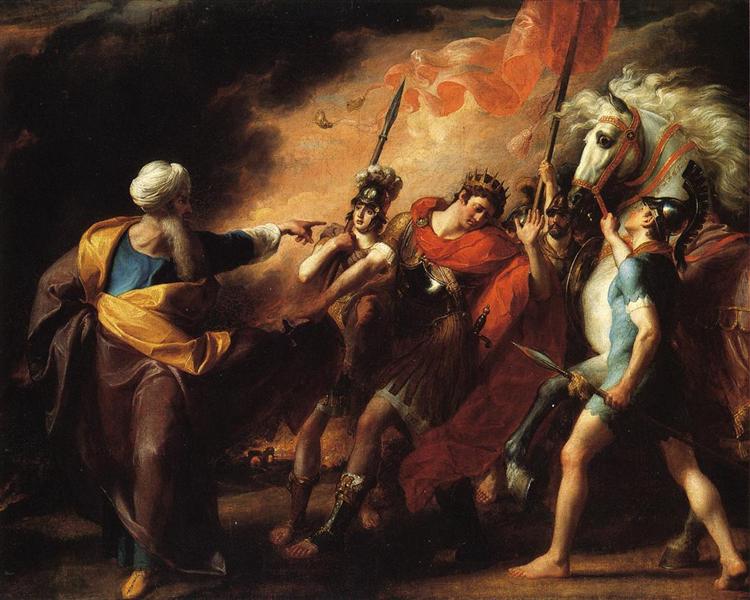
First Reading: 1 Samuel 15: 16-23
16 And Samuel said to Saul: Suffer me, and I will tell thee what the Lord hath said to me this night. And he said to him: Speak.
17 And Samuel said: When thou wast a little one in thy own eyes, wast thou not made the head of the tribes of Israel? And the Lord anointed thee to be king over Israel.
18 And the Lord sent thee on the way, and said: Go, and kill the sinners of Amalec, and thou shalt fight against them until thou hast utterly destroyed them.
19 Why then didst thou not hearken to the voice of the Lord: but hast turned to the prey, and hast done evil in the eyes of the Lord.
20 And Saul said to Samuel: Yea I have hearkened to the voice of the Lord, and have walked in the way by which the Lord sent me, and have brought Agag the king of Amalec, and Amalec I have slain.
21 But the people took of the spoils sheep and oxen, as the firstfruits of those things that were slain, to offer sacrifice to the Lord their God in Galgal.
22 And Samuel said: Doth the Lord desire holocausts and victims, and not rather that the voice of the Lord should be obeyed? For obedience is better than sacrifices: and to hearken rather than to offer the fat of rams.
23 Because it is like the sin of witchcraft, to rebel: and like the crime of idolatry, to refuse to obey. Forasmuch therefore as thou hast rejected the word of the Lord, the Lord hath also rejected thee from being king.
16 Ait autem Samuel ad Saul: Sine me, et indicabo tibi quæ locutus sit Dominus ad me nocte. Dixitque ei: Loquere.
17 Et ait Samuel: Nonne cum parvulus esses in oculis tuis, caput in tribubus Israël factus es? unxitque te Dominus in regem super Israël,
18 et misit te Dominus in viam, et ait: Vade, et interfice peccatores Amalec, et pugnabis contra eos usque ad internecionem eorum?
19 Quare ergo non audisti vocem Domini: sed versus ad prædam es, et fecisti malum in oculis Domini?
20 Et ait Saul ad Samuelem: Immo audivi vocem Domini, et ambulavi in via per quam misit me Dominus, et adduxi Agag regem Amalec, et Amalec interfeci.
21 Tulit autem de præda populus oves et boves, primitias eorum quæ cæsa sunt, ut immolet Domino Deo suo in Galgalis.
22 Et ait Samuel: Numquid vult Dominus holocausta et victimas, et non potius ut obediatur voci Domini? melior est enim obedientia quam victimæ, et auscultare magis quam offerre adipem arietum.
23 Quoniam quasi peccatum ariolandi est, repugnare: et quasi scelus idololatriæ, nolle acquiescere. Pro eo ergo quod abjecisti sermonem Domini, abjecit te Dominus ne sis rex.
Gospel: Mark 2: 18-22
18 And the disciples of John and the Pharisees used to fast; and they come and say to him: Why do the disciples of John and of the Pharisees fast; but thy disciples do not fast?
19 And Jesus saith to them: Can the children of the marriage fast, as long as the bridegroom is with them? As long as they have the bridegroom with them, they cannot fast.
20 But the days will come when the bridegroom shall be taken away from them; and then they shall fast in those days.
21 No man seweth a piece of raw cloth to an old garment: otherwise the new piecing taketh away from the old, and there is made a greater rent.
22 And no man putteth new wine into old bottles: otherwise the wine will burst the bottles, and both the wine will be spilled, and the bottles will be lost. But new wine must be put into new bottles.
18 Et erant discipuli Joannis et pharisæi jejunantes: et veniunt, et dicunt illi: Quare discipuli Joannis et pharisæorum jejunant, tui autem discipuli non jejunant?
19 Et ait illis Jesus: Numquid possunt filii nuptiarum, quamdiu sponsus cum illis est, jejunare? Quanto tempore habent secum sponsum, non possunt jejunare.
20 Venient autem dies cum auferetur ab eis sponsus: et tunc jejunabunt in illis diebus.
21 Nemo assumentum panni rudis assuit vestimento veteri: alioquin aufert supplementum novum a veteri, et major scissura fit.
22 Et nemo mittit vinum novum in utres veteres: alioquin dirumpet vinum utres, et vinum effundetur, et utres peribunt: sed vinum novum in utres novos mitti debet.

A Daily Question from the Summa Theologica
Whether Christ’s temptation should have taken place after His fast? (Article 3 of 4 of Question 41. Of Christ’s Temptation from the Treatise on the Incarnation)
Objection 1: It would seem that Christ’s temptation should not have taken place after His fast. For it has been said above (Q[40], A[2]) that an austere mode of life was not becoming to Christ. But it savors of extreme austerity that He should have eaten nothing for forty days and forty nights, for Gregory (Hom. xvi inn Evang.) explains the fact that “He fasted forty days and forty nights,” saying that “during that time He partook of no food whatever.” It seems, therefore, that He should not thus have fasted before His temptation.
Objection 2: Further, it is written (Mk. 1:13) that “He was in the desert forty days and forty nights; and was tempted by Satan.” Now, He fasted forty days and forty nights. Therefore it seems that He was tempted by the devil, not after, but during, His fast.
Objection 3: Further, we read that Christ fasted but once. But He was tempted by the devil, not only once, for it is written (Lk. 4:13) “that all the temptation being ended, the devil departed from Him for a time.” As, therefore, He did not fast before the second temptation, so neither should He have fasted before the first.
On the contrary, It is written (Matt. 4:2, 3): “When He had fasted forty days and forty nights, afterwards He was hungry”: and then “the tempter came to Him.”
I answer that, It was becoming that Christ should wish to fast before His temptation. First, in order to give us an example. For since we are all in urgent need of strengthening ourselves against temptation, as stated above (A[1]), by fasting before being tempted, He teaches us the need of fasting in order to equip ourselves against temptation. Hence the Apostle (2 Cor. 6:5, 7) reckons “fastings” together with the “armor of justice.”
Secondly, in order to show that the devil assails with temptations even those who fast, as likewise those who are given to other good works. And so Christ’s temptation took place after His fast, as also after His baptism. Hence since rather Chrysostom says (Hom. xiii super Matth.): “To instruct thee how great a good is fasting, and how it is a most powerful shield against the devil; and that after baptism thou shouldst give thyself up, not to luxury, but to fasting; for this cause Christ fasted, not as needing it Himself, but as teaching us.”
Thirdly, because after the fast, hunger followed, which made the devil dare to approach Him, as already stated (A[1], ad 1). Now, when “our Lord was hungry,” says Hilary (Super Matth. iii), “it was not because He was overcome by want of food, but because He abandoned His manhood to its nature. For the devil was to be conquered, not by God, but by the flesh.” Wherefore Chrysostom too says: “He proceeded no farther than Moses and Elias, lest His assumption of our flesh might seem incredible.”
Reply to Objection 1: It was becoming for Christ not to adopt an extreme form of austere life in order to show Himself outwardly in conformity with those to whom He preached. Now, no one should take up the office of preacher unless he be already cleansed and perfect in virtue, according to what is said of Christ, that “Jesus began to do and to teach” (Acts 1:1). Consequently, immediately after His baptism Christ adopted an austere form of life, in order to teach us the need of taming the flesh before passing on to the office of preaching, according to the Apostle (1 Cor. 9:27): “I chastise my body, and bring it into subjection, lest perhaps when I have preached to others, I myself should become a castaway.”
Reply to Objection 2: These words of Mark may be understood as meaning that “He was in the desert forty days and forty nights,” and that He fasted during that time: and the words, “and He was tempted by Satan,” may be taken as referring, not to the time during which He fasted, but to the time that followed: since Matthew says that “after He had fasted forty days and forty nights, afterwards He was hungry,” thus affording the devil a pretext for approaching Him. And so the words that follow, and the angels ministered to Him, are to be taken in sequence, which is clear from the words of Matthew (4:11): “Then the devil left Him,” i.e. after the temptation, “and behold angels came and ministered to Him.” And as to the words inserted by Mark, “and He was with the beasts,” according to Chrysostom (Hom. xiii in Matth.), they are set down in order to describe the desert as being impassable to man and full of beasts.
On the other hand, according to Bede’s exposition ofMark 1:12, 13our Lord was tempted forty days and forty nights. But this is not to be understood of the visible temptations which are related by Matthew and Luke, and occurred after the fast, but of certain other assaults which perhaps Christ suffered from the devil during that time of His fast.
Reply to Objection 3: As Ambrose says on Lk. 4:13, the devil departed from Christ “for a time, because, later on, he returned, not to tempt Him, but to assail Him openly”—namely, at the time of His Passion. Nevertheless, He seemed in this later assault to tempt Christ to dejection and hatred of His neighbor; just as in the desert he had tempted Him to gluttonous pleasure and idolatrous contempt of God.
Continue reading the rest of the articles on Sacred Texts Archive website.