Weekday
Liturgical Color: Green
Rosary Mysteries: Sorrowful Mysteries

Daily Readings
First Reading: 2 Samuel 11: 1-10, 13-17
1 And it came to pass at the return of the year, at the time when kings go forth to war, that David sent Joab and his servants with him, and all Israel, and they spoiled the children of Ammon, and besieged Rabba: but David remained in Jerusalem.
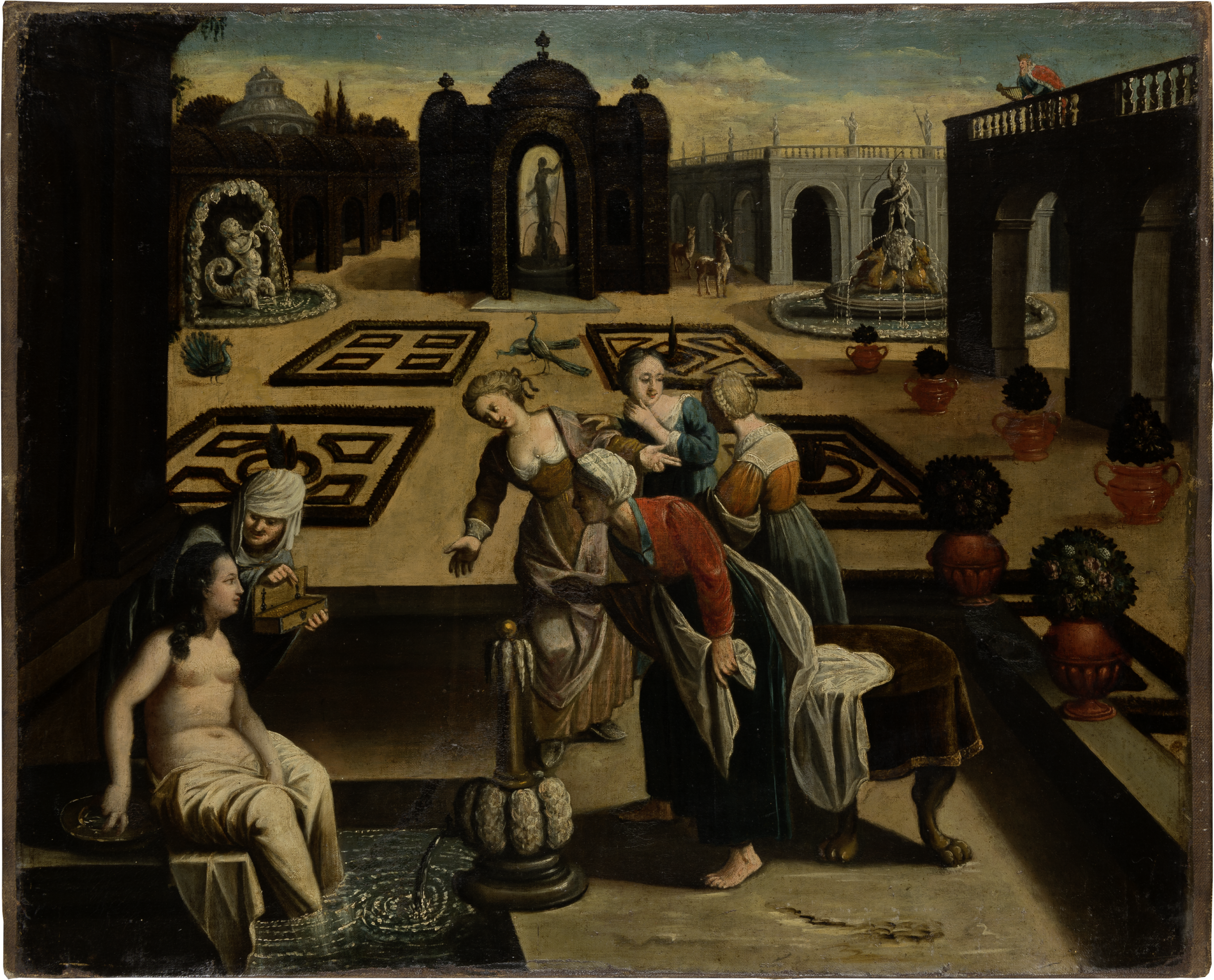
2 In the mean time it happened that David arose from his bed after noon, and walked upon the roof of the king’s house: and he saw from the roof of his house a woman washing herself, over against him: and the woman was very beautiful.
3 And the king sent, and inquired who the woman was. And it was told him, that she was Bethsabee the daughter of Eliam, the wife of Urias the Hethite.
4 And David sent messengers, and took her, and she came in to him, and he slept with her: and presently she was purified from her uncleanness:
5 And she returned to her house having conceived. And she sent and told David, and said: I have conceived.
6 And David sent to Joab, saying: Send me Urias the Hethite. And Joab sent Urias to David.
7 And Urias came to David. And David asked how Joab did, and the people, and how the war was carried on.
8 And David said to Urias: Go into thy house, and wash thy feet. And Urias went out from the king’s house, and there went out after him a mess of meat from the king.
9 But Urias slept before the gate of the king’s house, with the other servants of his lord, and went not down to his own house.
10 And it was told David by some that said: Urias went not to his house. And David said to Urias: Didst thou not come from thy journey? why didst thou not go down to thy house?
13 And David called him to eat and to drink before him, and he made him drunk: and he went out in the evening, and slept on his couch with the servants of his lord, and went not down into his house.
14 And when the morning was come, David wrote a letter to Joab: and sent it by the hand of Urias,
15 Writing in the letter: Set ye Urias in the front of the battle, where the fight is strongest: and leave ye him, that he may be wounded and die.
16 Wherefore as Joab was besieging the city, he put Urias in the place where he knew the bravest men were.
17 And the men coming out of the city, fought against Joab, and there fell some of the people of the servants of David, and Urias the Hethite was killed also.
1 Factum est autem, vertente anno, eo tempore quo solent reges ad bella procedere, misit David Joab, et servos suos cum eo, et universum Israël, et vastaverunt filios Ammon, et obsederunt Rabba: David autem remansit in Jerusalem.
2 Dum hæc agerentur, accidit ut surgeret David de strato suo post meridiem, et deambularet in solario domus regiæ: viditque mulierem se lavantem ex adverso super solarium suum: erat autem mulier pulchra valde.
3 Misit ergo rex, et requisivit quæ esset mulier. Nuntiatumque est ei quod ipsa esset Bethsabee filia Eliam, uxor Uriæ Hethæi.
4 Missis itaque David nuntiis, tulit eam: quæ cum ingressa esset ad illum, dormivit cum ea: statimque sanctificata est ab immunditia sua,
5 et reversa est domum suam concepto fœtu. Mittensque nuntiavit David, et ait: Concepi.
6 Misit autem David ad Joab, dicens: Mitte ad me Uriam Hethæum. Misitque Joab Uriam ad David.
7 Et venit Urias ad David. Quæsivitque David quam recte ageret Joab et populus, et quomodo administraretur bellum.
8 Et dixit David ad Uriam: Vade in domum tuam, et lava pedes tuos. Et egressus est Urias de domo regis, secutusque est eum cibus regius.
9 Dormivit autem Urias ante portam domus regiæ cum aliis servis domini sui, et non descendit ad domum suam.
10 Nuntiatumque est David a dicentibus: Non ivit Urias in domum suam. Et ait David ad Uriam: Numquid non de via venisti? quare non descendisti in domum tuam?
13 et vocavit eum David ut comederet coram se et biberet, et inebriavit eum: qui egressus vespere, dormivit in strato suo cum servis domini sui, et in domum suam non descendit.
14 Factum est ergo mane, et scripsit David epistolam ad Joab: misitque per manum Uriæ,
15 scribens in epistola: Ponite Uriam ex adverso belli, ubi fortissimum est prælium: et derelinquite eum, ut percussus intereat.
16 Igitur cum Joab obsideret urbem, posuit Uriam in loco ubi sciebat viros esse fortissimos.
17 Egressique viri de civitate, bellabant adversum Joab, et ceciderunt de populo servorum David, et mortuus est etiam Urias Hethæus.
Gospel: Mark 4: 26-34
26 And he said: So is the kingdom of God, as if a man should cast seed into the earth,
27 And should sleep, and rise, night and day, and the seed should spring, and grow up whilst he knoweth not.
28 For the earth of itself bringeth forth fruit, first the blade, then the ear, afterwards the full corn in the ear.
29 And when the fruit is brought forth, immediately he putteth in the sickle, because the harvest is come.
30 And he said: To what shall we liken the kingdom of God? or to what parable shall we compare it?
31 It is as a grain of mustard seed: which when it is sown in the earth, is less than all the seeds that are in the earth:
32 And when it is sown, it groweth up, and becometh greater than all herbs, and shooteth out great branches, so that the birds of the air may dwell under the shadow thereof.
33 And with many such parables, he spoke to them the word, according as they were able to hear.
34 And without parable he did not speak unto them; but apart, he explained all things to his disciples.
26 Et dicebat: Sic est regnum Dei, quemadmodum si homo jaciat sementem in terram,
27 et dormiat, et exsurgat nocte et die, et semen germinet, et increscat dum nescit ille.
28 Ultro enim terra fructificat, primum herbam, deinde spicam, deinde plenum frumentum in spica.
29 Et cum produxerit fructus, statim mittit falcem, quoniam adsit messis.
30 Et dicebat: Cui assimilabimus regnum Dei? aut cui parabolæ comparabimus illud?
31 Sicut granum sinapis, quod cum seminatum fuerit in terra, minus est omnibus seminibus, quæ sunt in terra:
32 et cum seminatum fuerit, ascendit, et fit majus omnibus oleribus, et facit ramos magnos, ita ut possint sub umbra ejus aves cæli habitare.
33 Et talibus multis parabolis loquebatur eis verbum, prout poterant audire:
34 sine parabola autem non loquebatur eis: seorsum autem discipulis suis disserebat omnia.

A Daily Question from the Summa Theologica
Whether sacramental grace confers anything in addition to the grace of the virtues and gifts? (Article 2 of 6 of Question 62. Of the Sacraments’ Principal Effect Which is Grace from the Treatise on the Sacraments)
Objection 1: It seems that sacramental grace confers nothing in addition to the grace of the virtues and gifts. For the grace of the virtues and gifts perfects the soul sufficiently, both in its essence and in its powers; as is clear from what was said in the FS, Q[110], AA[3],4. But grace is ordained to the perfecting of the soul. Therefore sacramental grace cannot confer anything in addition to the grace of the virtues and gifts.
Objection 2: Further, the soul’s defects are caused by sin. But all sins are sufficiently removed by the grace of the virtues and gifts: because there is no sin that is not contrary to some virtue. Since, therefore, sacramental grace is ordained to the removal of the soul’s defects, it cannot confer anything in addition to the grace of the virtues and gifts.
Objection 3: Further, every addition or subtraction of form varies the species (Metaph. viii). If, therefore, sacramental grace confers anything in addition to the grace of the virtues and gifts, it follows that it is called grace equivocally: and so we are none the wiser when it is said that the sacraments cause grace.
On the contrary, If sacramental grace confers nothing in addition to the grace of the virtues and gifts, it is useless to confer the sacraments on those who have the virtues and gifts. But there is nothing useless in God’s works. Therefore it seems that sacramental grace confers something in addition to the grace of the virtues and gifts.
I answer that, As stated in the FS, Q[110], AA[3],4, grace, considered in itself, perfects the essence of the soul, in so far as it is a certain participated likeness of the Divine Nature. And just as the soul’s powers flow from its essence, so from grace there flow certain perfections into the powers of the soul, which are called virtues and gifts, whereby the powers are perfected in reference to their actions. Now the sacraments are ordained unto certain special effects which are necessary in the Christian life: thus Baptism is ordained unto a certain spiritual regeneration, by which man dies to vice and becomes a member of Christ: which effect is something special in addition to the actions of the soul’s powers: and the same holds true of the other sacraments. Consequently just as the virtues and gifts confer, in addition to grace commonly so called, a certain special perfection ordained to the powers’ proper actions, so does sacramental grace confer, over and above grace commonly so called, and in addition to the virtues and gifts, a certain Divine assistance in obtaining the end of the sacrament. It is thus that sacramental grace confers something in addition to the grace of the virtues and gifts.
Reply to Objection 1: The grace of the virtues and gifts perfects the essence and powers of the soul sufficiently as regards ordinary conduct: but as regards certain special effects which are necessary in a Christian life, sacramental grace is needed.
Reply to Objection 2: Vices and sins are sufficiently removed by virtues and gifts, as to present and future time. in so far as they prevent man from sinning. But in regard to past sins, the acts of which are transitory whereas their guilt remains, man is provided with a special remedy in the sacraments.
Reply to Objection 3: Sacramental grace is compared to grace commonly so called, as species to genus. Wherefore just as it is not equivocal to use the term “animal” in its generic sense, and as applied to a man, so neither is it equivocal to speak of grace commonly so called and of sacramental grace.
Continue reading the rest of the articles on Sacred Texts Archive website.