Weekday
Liturgical Color: Green/ White
Rosary Mysteries: Joyful Mysteries

Daily Readings
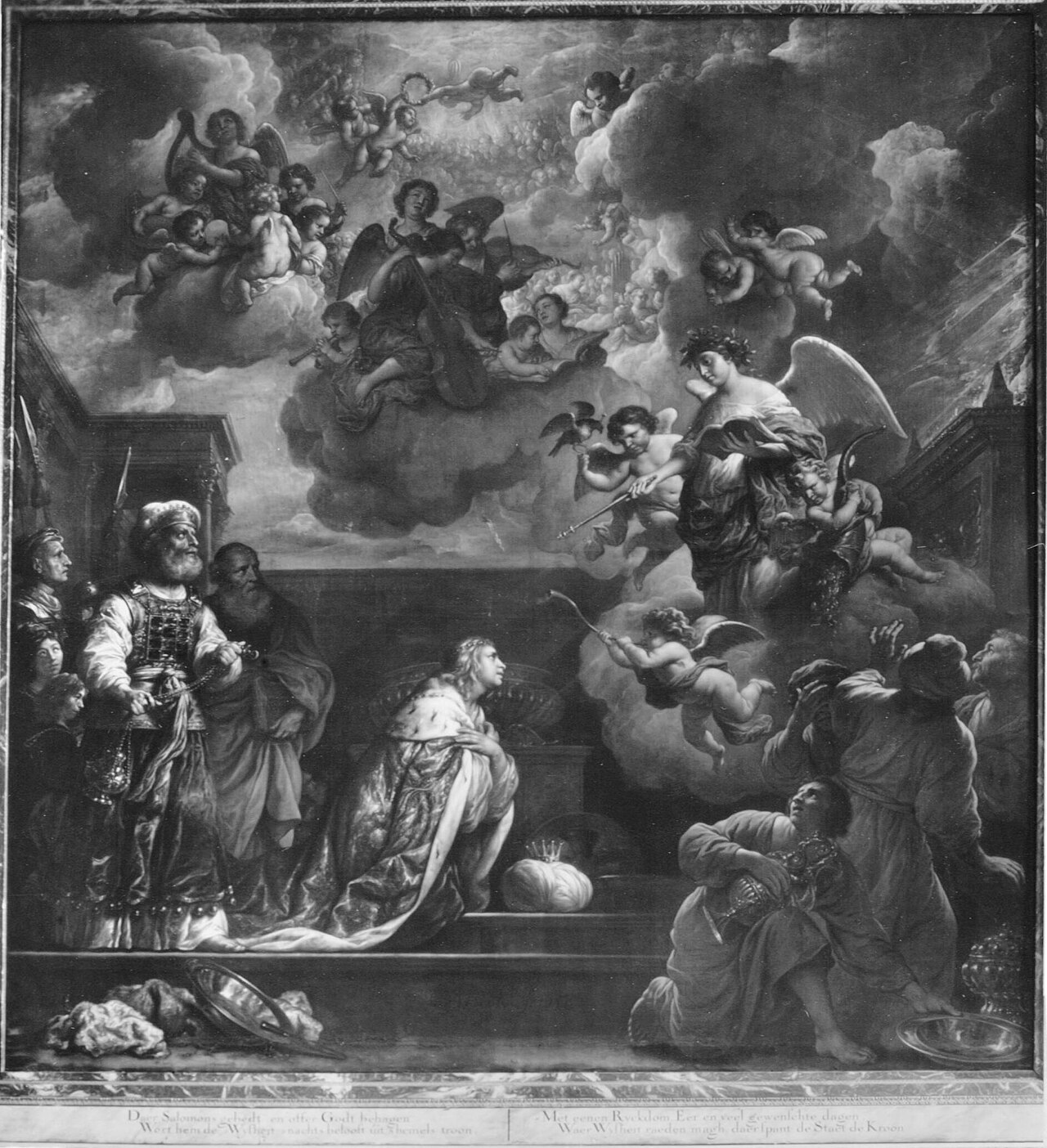
First Reading: 1 Kings 3: 4-13
4 He went therefore to Gabaon, to sacrifice there: for that was the great high place: a thousand victims for holocausts did Solomon offer upon that altar in Gabaon.
5 And the Lord appeared to Solomon in a dream by night, saying: Ask what thou wilt that I should give thee.
6 And Solomon said: Thou hast shewn great mercy to thy servant David my father, even as, he walked before thee in truth, and justice, and an upright heart with thee: and thou hast kept thy great mercy for him, and hast given him a son to sit on his throne, as it is this day.
7 And now, O Lord God, thou hast made thy servant king instead of David my father: and I am but a child, and know not how to go out and come in.
8 And thy servant is in the midst of the people which thou hast chosen, an immense people, which cannot be numbered nor counted for multitude.
9 Give therefore to thy servant an understanding heart, to judge thy people, and discern between good and evil. For who shall be able to judge this people, thy people which is so numerous?
10 And the word was pleasing to the Lord that Solomon had asked such a thing.
11 And the Lord said to Solomon: Because thou hast asked this thing, and hast not asked for thyself long life or riches, nor the lives of thy enemies, but hast asked for thyself wisdom to discern judgment,
12 Behold I have done for thee according to thy words, and have given thee a wise and understanding heart, insomuch that there hath been no one like thee before thee, nor shall arise after thee.
13 Yea and the things also which thou didst not ask, I have given thee: to wit riches and glory, as that no one hath been like thee among the kings in all days heretofore.
4 Abiit itaque in Gabaon, ut immolaret ibi: illud quippe erat excelsum maximum: mille hostias in holocaustum obtulit Salomon super altare illud in Gabaon.
5 Apparuit autem Dominus Salomoni per somnium nocte, dicens: Postula quod vis ut dem tibi.
6 Et ait Salomon: Tu fecisti cum servo tuo David patre meo misericordiam magnam, sicut ambulavit in conspectu tuo in veritate et justitia, et recto corde tecum: custodisti ei misericordiam tuam grandem, et dedisti ei filium sedentem super thronum ejus, sicut est hodie.
7 Et nunc Domine Deus, tu regnare fecisti servum tuum pro David patre meo: ego autem sum puer parvulus, et ignorans egressum et introitum meum.
8 Et servus tuus in medio est populi quem elegisti, populi infiniti, qui numerari et supputari non potest præ multitudine.
9 Dabis ergo servo tuo cor docile, ut populum tuum judicare possit, et discernere inter bonum et malum. Quis enim poterit judicare populum istum, populum tuum hunc multum?
10 Placuit ergo sermo coram Domino, quod Salomon postulasset hujuscemodi rem.
11 Et dixit Dominus Salomoni: Quia postulasti verbum hoc, et non petisti tibi dies multos, nec divitias, aut animas inimicorum tuorum, sed postulasti tibi sapientiam ad discernendum judicium:
12 ecce feci tibi secundum sermones tuos, et dedi tibi cor sapiens et intelligens, in tantum ut nullus ante te similis tui fuerit, nec post te surrecturus sit.
13 Sed et hæc quæ non postulasti, dedi tibi: divitias scilicet, et gloriam, ut nemo fuerit similis tui in regibus cunctis retro diebus.
Gospel: Mark 6: 30-34
30 And the apostles coming together unto Jesus, related to him all things that they had done and taught.
31 And he said to them: Come apart into a desert place, and rest a little. For there were many coming and going: and they had not so much as time to eat.
32 And going up into a ship, they went into a desert place apart.
33 And they saw them going away, and many knew: and they ran flocking thither on foot from all the cities, and were there before them.
34 And Jesus going out saw a great multitude: and he had compassion on them, because they were as sheep not having a shepherd, and he began to teach them many things.
30 Et convenientes Apostoli ad Jesum, renuntiaverunt ei omnia quæ egerant, et docuerant.
31 Et ait illis: Venite seorsum in desertum locum, et requiescite pusillum. Erant enim qui veniebant et redibant multi: et nec spatium manducandi habebant.
32 Et ascendentes in navim, abierunt in desertum locum seorsum.
33 Et viderunt eos abeuntes, et cognoverunt multi: et pedestres de omnibus civitatibus concurrerunt illuc, et prævenerunt eos.
34 Et exiens vidit turbam multam Jesus: et misertus est super eos, quia erant sicut oves non habentes pastorem, et cœpit docere multa.

A Daily Question from the Summa Theologica
Whether the character be subjected in the powers of the soul? (Article 4 of 6 of Question 63. Of the Other Effect of the Sacrament Which is a Character from the Treatise on the Sacraments)
Objection 1: It seems that the character is not subjected in the powers of the soul. For a character is said to be a disposition to grace. But grace is subjected in the essence of the soul as we have stated in the FS, Q[110], A[4]. Therefore it seems that the character is in the essence of the soul and not in the powers.
Objection 2: Further, a power of the soul does not seem to be the subject of anything save habit and disposition. But a character, as stated above (A[2]), is neither habit nor disposition, but rather a power: the subject of which is nothing else than the essence of the soul. Therefore it seems that the character is not subjected in a power of the soul, but rather in its essence.
Objection 3: Further, the powers of the soul are divided into those of knowledge and those of appetite. But it cannot be said that a character is only in a cognitive power, nor, again, only in an appetitive power: since it is neither ordained to knowledge only, nor to desire only. Likewise, neither can it be said to be in both, because the same accident cannot be in several subjects. Therefore it seems that a character is not subjected in a power of the soul, but rather in the essence.
On the contrary, A character, according to its definition given above (A[3]), is imprinted in the rational soul “by way of an image.” But the image of the Trinity in the soul is seen in the powers. Therefore a character is in the powers of the soul.
I answer that, As stated above (A[3]), a character is a kind of seal by which the soul is marked, so that it may receive, or bestow on others, things pertaining to Divine worship. Now the Divine worship consists in certain actions: and the powers of the soul are properly ordained to actions, just as the essence is ordained to existence. Therefore a character is subjected not in the essence of the soul, but in its power.
Reply to Objection 1: The subject is ascribed to an. accident in respect of that to which the accident disposes it proximately, but not in respect of that to which it disposes it remotely or indirectly. Now a character disposes the soul directly and proximately to the fulfilling of things pertaining to Divine worship: and because such cannot be accomplished suitably without the help of grace, since, according to Jn. 4:24, “they that adore” God “must adore Him in spirit and in truth,” consequently, the Divine bounty bestows grace on those who receive the character, so that they may accomplish worthily the service to which they are deputed. Therefore the subject should be ascribed to a character in respect of those actions that pertain to the Divine worship, rather than in respect of grace.
Reply to Objection 2: The subject of the natural power, which flows from the principles of the essence. Now a character is not a power of this kind. but a spiritual power coming from without. Wherefore, just as the essence of the soul, from which man has his natural life, is perfected by grace from which the soul derives spiritual life; so the natural power of the soul is perfected by a spiritual power, which is a character. For habit and disposition belong to a power of the soul, since they are ordained to actions of which the powers are the principles. And in like manner whatever is ordained to action, should be attributed to a power.
Reply to Objection 3: As stated above, a character is ordained unto things pertaining to the Divine worship; which is a protestation of faith expressed by exterior signs. Consequently, a character needs to be in the soul’s cognitive power, where also is faith.
Continue reading the rest of the articles on Sacred Texts Archive website.