Friday after Ash Wednesday
LITurgical Color: Violet
Rosary Mysteries: Sorrowful Mysteries

Daily Readings
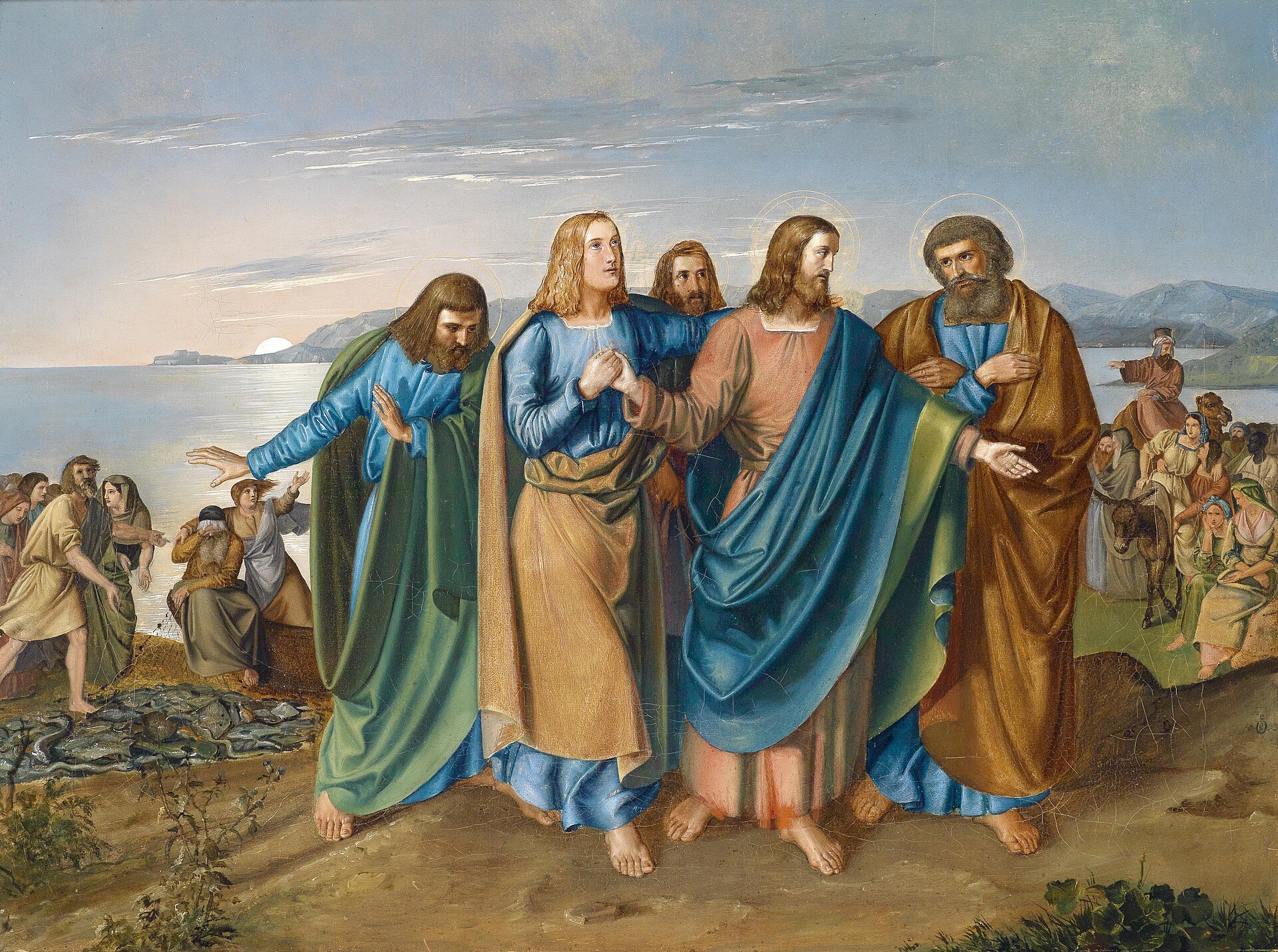
Gospel: Matthew 9: 14-15
14 Then came to him the disciples of John, saying: Why do we and the Pharisees, fast often, but thy disciples do not fast?
15 And Jesus said to them: Can the children of the bridegroom mourn, as long as the bridegroom is with them? But the days will come, when the bridegroom shall be taken away from them, and then they shall fast.
14 Tunc accesserunt ad eum discipuli Joannis, dicentes: Quare nos, et pharisæi, jejunamus frequenter: discipuli autem tui non jejunant?
15 Et ait illis Jesus: Numquid possunt filii sponsi lugere, quamdiu cum illis est sponsus? Venient autem dies cum auferetur ab eis sponsus: et tunc jejunabunt.
First Reading: Isaiah 58: 1-9a
1 Cry, cease not, lift up thy voice like a trumpet, and shew my people their wicked doings, and the house of Jacob their sins.
2 For they seek me from day to day, and desire to know my ways, as a nation that hath done justice, and hath not forsaken the judgment of their God: they ask of me the judgments of justice: they are willing to approach to God.
3 Why have we fasted, and thou hast not regarded: have we humbled our souls, and thou hast not taken notice? Behold in the day of your fast your own will is found, and you exact of all your debtors.
4 Behold you fast for debates and strife, and strike with the fist wickedly. Do not fast as you have done until this day, to make your cry to be heard on high.
5 Is this such a fast as I have chosen: for a man to afflict his soul for a day? is this it, to wind his head about like a circle, and to spread sackcloth and ashes? wilt thou call this a fast, and a day acceptable to the Lord?
6 Is not this rather the fast that I have chosen? loose the bands of wickedness, undo the bundles that oppress, let them that are broken go free, and break asunder every burden.
7 Deal thy bread to the hungry, and bring the needy and the harbourless into thy house: when thou shalt see one naked, cover him, and despise not thy own flesh.
8 Then shall thy light break forth as the morning, and thy health shall speedily arise, and thy justice shall go before thy face, and the glory of the Lord shall gather thee up.
9 Then shalt thou call, and the Lord shall hear: thou shalt cry, and he shall say, Here I am. If thou wilt take away the chain out of the midst of thee, and cease to stretch out the finger, and to speak that which profiteth not.
1 [Clama, ne cesses,
quasi tuba exalta vocem tuam,
et annuntia populo meo scelera eorum,
et domui Jacob peccata eorum.
2 Me etenim de die in diem quærunt,
et scire vias meas volunt,
quasi gens quæ justitiam fecerit,
et judicium Dei sui non dereliquerit.
Rogant me judicia justitiæ;
appropinquare Deo volunt.
3 Quare jejunavimus, et non aspexisti;
humiliavimus animas nostras, et nescisti?
Ecce in die jejunii vestri invenitur voluntas vestra,
et omnes debitores vestros repetitis.
4 Ecce ad lites et contentiones jejunatis,
et percutitis pugno impie.
Nolite jejunare sicut usque ad hanc diem,
ut audiatur in excelso clamor vester.
5 Numquid tale est jejunium quod elegi,
per diem affligere hominem animam suam?
numquid contorquere quasi circulum caput suum,
et saccum et cinerem sternere?
numquid istud vocabis jejunium,
et diem acceptabilem Domino?]
6 [Nonne hoc est magis jejunium quod elegi?
Dissolve colligationes impietatis,
solve fasciculos deprimentes,
dimitte eos qui confracti sunt liberos,
et omne opus dirumpe;
7 frange esurienti panem tuum,
et egenos vagosque induc in domum tuam;
cum videris nudum, operi eum,
et carnem tuam ne despexeris.
8 Tunc erumpet quasi mane lumen tuum;
et sanitas tua citius orietur,
et anteibit faciem tuam justitia tua,
et gloria Domini colliget te.
9 Tunc invocabis, et Dominus exaudiet;
clamabis, et dicet: Ecce adsum.
Si abstuleris de medio tui catenam,
et desieris extendere digitum et loqui quod non prodest

A Daily Question from the Summa Theologica
Whether wicked men sin in administering the sacraments? (Article 6 of 10 of Question 64. Of the Causes of the Sacraments from the Treatise on the Sacraments)
Objection 1: It seems that wicked men do not sin in administering the sacraments. For just as men serve God in the sacraments, so do they serve Him in works of charity; whence it is written (Heb. 13:16): “Do not forget to do good and to impart, for by such sacrifices God’s favor is obtained.” But the wicked do not sin in serving God by works of charity: indeed, they should be persuaded to do so, according to Dan. 4:24: “Let my counsel be acceptable” to the king; “Redeem thou thy sins with alms.” Therefore it seems that wicked men do not sin in administering the sacraments.
Objection 2: Further, whoever co-operates with another in his sin, is also guilty of sin, according to Rom. 1:32: “He is [Vulg.: ‘They are’] worthy of death; not only he that commits the sin, but also he who consents to them that do them.” But if wicked ministers sin in administering sacraments, those who receive sacraments from them, co-operate in their sin. Therefore they would sin also; which seems unreasonable.
Objection 3: Further, it seems that no one should act when in doubt, for thus man would be driven to despair, as being unable to avoid sin. But if the wicked were to sin in administering sacraments, they would be in a state of perplexity: since sometimes they would sin also if they did not administer sacraments; for instance, when by reason of their office it is their bounden duty to do so; for it is written (1 Cor. 9:16): “For a necessity lieth upon me: Woe is unto me if I preach not the gospel.” Sometimes also on account of some danger; for instance, if a child in danger of death be brought to a sinner for baptism. Therefore it seems that the wicked do not sin in administering the sacraments.
On the contrary, Dionysius says (Eccl. Hier. i) that “it is wrong for the wicked even to touch the symbols,” i.e. the sacramental signs. And he says in the epistle to Demophilus: “It seems presumptuous for such a man,” i.e. a sinner, “to lay hands on priestly things; he is neither afraid nor ashamed, all unworthy that he is, to take part in Divine things, with the thought that God does not see what he sees in himself: he thinks, by false pretenses, to cheat Him Whom he calls his Father; he dares to utter, in the person of Christ, words polluted by his infamy, I will not call them prayers, over the Divine symbols.”
I answer that, A sinful action consists in this, that a man “fails to act as he ought to,” as the Philosopher explains (Ethic. ii). Now it has been said (A[5], ad 3) that it is fitting for the ministers of sacraments to be righteous; because ministers should be like unto their Lord, according to Lev. 19:2: “Be ye holy, because I . . . am holy”; and Ecclus. 10:2: “As the judge of the people is himself, so also are his ministers.” Consequently, there can be no doubt that the wicked sin by exercising the ministry of God and the Church, by conferring the sacraments. And since this sin pertains to irreverence towards God and the contamination of holy things, as far as the man who sins is concerned, although holy things in themselves cannot be contaminated; it follows that such a sin is mortal in its genus.
Reply to Objection 1: Works of charity are not made holy by some process of consecration, but they belong to the holiness of righteousness, as being in a way parts of righteousness. Consequently, when a man shows himself as a minister of God, by doing works of charity, if he be righteous, he will be made yet holier; but if he be a sinner, he is thereby disposed to holiness. On the other hand, the sacraments are holy in themselves owing to their mystical consecration. Wherefore the holiness of righteousness is required in the minister, that he may be suitable for his ministry: for which reason he acts unbecomingly and sins, if while in a state of sin he attempts to fulfil that ministry.
Reply to Objection 2: He who approaches a sacrament, receives it from a minister of the Church, not because he is such and such a man, but because he is a minister of the Church. Consequently, as long as the latter is tolerated in the ministry, he that receives a sacrament from him, does not communicate in his sin, but communicates with the Church from. whom he has his ministry. But if the Church, by degrading, excommunicating, or suspending him, does not tolerate him in the ministry, he that receives a sacrament from him sins, because he communicates in his sin.
Reply to Objection 3: A man who is in mortal sin is not perplexed simply, if by reason of his office it be his bounden duty to minister sacraments; because he can repent of his sin and so minister lawfully. But there is nothing unreasonable in his being perplexed, if we suppose that he wishes to remain in sin.
However, in a case of necessity when even a lay person might baptize, he would not sin in baptizing. For it is clear that then he does not exercise the ministry of the Church, but comes to the aid of one who is in need of his services. It is not so with the other sacraments, which are not so necessary as baptism, as we shall show further on (Q[65], AA[3],4; Q[62], A[3]).
Continue reading the rest of the articles on Sacred Texts Archive website.