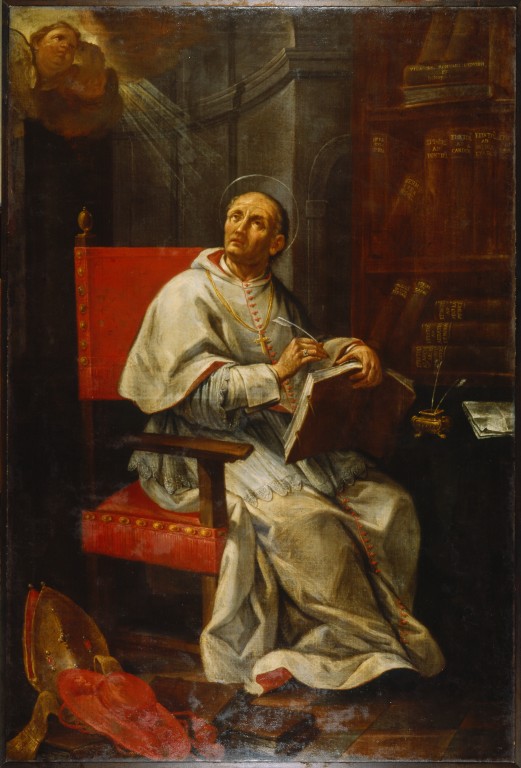
Optional Memorial of Saint Peter Damian, Bishop and Doctor of the Church
LITurgical Color: Violet
Rosary Mysteries: Joyful Mysteries
“Let us detach ourselves in spirit from all that we see and cling to that which we believe.”
Saint Peter Damian
1007 – February 22, 1072
Patron of sleep difficulties

Daily Readings
Gospel: Luke 5: 27-32
27 And after these things, he went forth and saw a publican named Levi, sitting at the receipt of custom: and he said to him: Follow me.
28 And leaving all things, he rose up and followed him.
29 And Levi made him a great feast in his own house: And there was a great company of publicans and of others that were at table with them.
30 But the Pharisees and scribes murmured, saying to his disciples: Why do you eat and drink with publicans and sinners?
31 And Jesus answering, said to them: They that are whole need not the physician: but they that are sick.
32 I came not to call the just, but sinners to penance.
27 Et post hæc exiit, et vidit publicanum nomine Levi, sedentem ad telonium, et ait illi: Sequere me.
28 Et relictis omnibus, surgens secutus est eum.
29 Et fecit ei convivium magnum Levi in domo sua: et erat turba multa publicanorum, et aliorum qui cum illis erant discumbentes.
30 Et murmurabant pharisæi et scribæ eorum, dicentes ad discipulos ejus: Quare cum publicanis et peccatoribus manducatis et bibitis?
31 Et respondens Jesus, dixit ad illos: Non egent qui sani sunt medico, sed qui male habent.
32 Non veni vocare justos, sed peccatores ad pœnitentiam.
First Reading: Isaiah 58: 9b-14
9 Then shalt thou call, and the Lord shall hear: thou shalt cry, and he shall say, Here I am. If thou wilt take away the chain out of the midst of thee, and cease to stretch out the finger, and to speak that which profiteth not.
10 When thou shalt pour out thy soul to the hungry, and shalt satisfy the afflicted soul, then shall thy light rise up in darkness, and thy darkness shall be as the noonday.
11 And the Lord will give thee rest continually, and will fill thy soul with brightness, and deliver thy bones, and thou shalt be like a watered garden, and like a fountain of water whose waters shall not fail.
12 And the places that have been desolate for ages shall be built in thee: thou shalt raise up the foundation of generation and generation: and thou shalt be called the repairer of the fences, turning the paths into rest.
13 If thou turn away thy foot from the sabbath, from doing thy own will in my holy day, and call the sabbath delightful, and the holy of the Lord glorious, and glorify him, while thou dost not thy own ways, and thy own will is not found, to speak a word:
14 Then shalt thou be delighted in the Lord, and I will lift thee up above the high places of the earth, and will feed thee with the inheritance of Jacob thy father. For the mouth of the Lord hath spoken it.
9 Tunc invocabis, et Dominus exaudiet;
clamabis, et dicet: Ecce adsum.
Si abstuleris de medio tui catenam,
et desieris extendere digitum et loqui quod non prodest;
10 cum effuderis esurienti animam tuam,
et animam afflictam repleveris,
orietur in tenebris lux tua,
et tenebræ tuæ erunt sicut meridies.
11 Et requiem tibi dabit Dominus semper,
et implebit splendoribus animam tuam,
et ossa tua liberabit;
et eris quasi hortus irriguus,
et sicut fons aquarum
cujus non deficient aquæ.
12 Et ædificabuntur in te deserta sæculorum,
fundamenta generationis et generationis suscitabis;
et vocaberis ædificator sepium,
avertens semitas in quietem.
13 Si averteris a sabbato pedem tuum
facere voluntatem tuam in die sancto meo,
et vocaveris sabbatum delicatum,
et sanctum Domini gloriosum,
et glorificaveris eum dum non facis vias tuas,
et non invenitur voluntas tua, ut loquaris sermonem:
14 tunc delectaberis super Domino,
et sustollam te super altitudines terræ,
et cibabo te hæreditate Jacob patris tui:
os enim Domini locutum est.]

A Daily Question from the Summa Theologica
Whether angels can administer sacraments? (Article 7 of 10 of Question 64. Of the Causes of the Sacraments from the Treatise on the Sacraments)
Objection 1: It seems that angels can administer sacraments. Because a higher minister can do whatever the lower can; thus a priest can do whatever a deacon can: but not conversely. But angels are higher ministers in the hierarchical order than any men whatsoever, as Dionysius says (Coel. Hier. ix). Therefore, since men can be ministers of sacraments, it seems that much more can angels be.
Objection 2: Further, in heaven holy men are likened to the angels (Mat. 22:30). But some holy men, when in heaven, can be ministers of the sacraments; since the sacramental character is indelible, as stated above (Q[63], A[5]). Therefore it seems that angels too can be ministers of sacraments.
Objection 3: Further, as stated above (Q[8], A[7]), the devil is head of the wicked, and the wicked are his members. But sacraments can be administered by the wicked. Therefore it seems that they can be administered even by demons.
On the contrary, It is written (Heb. 5:1): “Every high priest taken from among men, is ordained for men in the things that appertain to God.” But angels whether good or bad are not taken from among men. Therefore they are not ordained ministers in the things that appertain to God, i.e. in the sacraments.
I answer that, As stated above (A[3]; Q[62], A[5]), the whole power of the sacraments flows from Christ’s Passion, which belongs to Him as man. And Him in their very nature men, not angels, resemble; indeed, in respect of His Passion, He is described as being “a little lower than the angels” (Heb. 2:9). Consequently, it belongs to men, but not to angels, to dispense the sacraments and to take part in their administration.
But it must be observed that as God did not bind His power to the sacraments, so as to be unable to bestow the sacramental effect without conferring the sacrament; so neither did He bind His power to the ministers of the Church so as to be unable to give angels power to administer the sacraments. And since good angels are messengers of truth; if any sacramental rite were performed by good angels, it should be considered valid, because it ought to be evident that this is being done by the will of God: for instance, certain churches are said to have been consecrated by the ministry of the angels [*See Acta S.S., September 29]. But if demons, who are “lying spirits,” were to perform a sacramental rite, it should be pronounced as invalid.
Reply to Objection 1: What men do in a less perfect manner, i.e. by sensible sacraments, which are proportionate to their nature, angels also do, as ministers of a higher degree, in a more perfect manner, i.e. invisibly—by cleansing, enlightening, and perfecting.
Reply to Objection 2: The saints in heaven resemble the angels as to their share of glory, but not as to the conditions of their nature: and consequently not in regard to the sacraments.
Reply to Objection 3: Wicked men do not owe their power of conferring sacraments to their being members of the devil. Consequently, it does not follow that “a fortiori” the devil, their head, can do so.
Continue reading the rest of the articles on Sacred Texts Archive website.