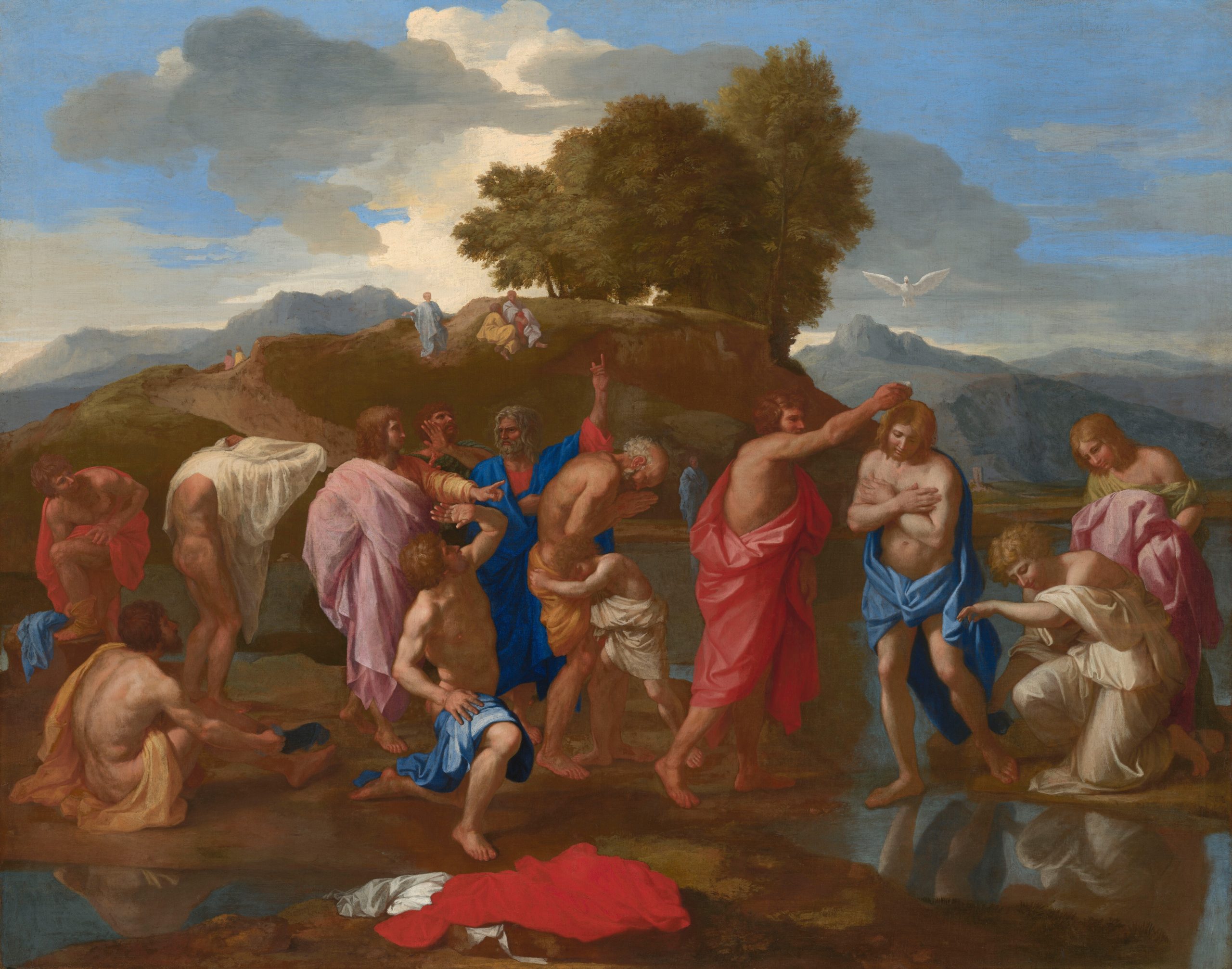
Christmas Weekday
Liturgical Color: White
Rosary Mysteries: Joyful Mysteries

Daily Readings
First Reading: 1 John 5: 14-21
14 And this is the confidence which we have towards him: That, whatsoever we shall ask according to his will, he heareth us.
15 And we know that he heareth us whatsoever we ask: we know that we have the petitions which we request of him.
16 He that knoweth his brother to sin a sin which is not to death, let him ask, and life shall be given to him, who sinneth not to death. There is a sin unto death: for that I say not that any man ask.
17 All iniquity is sin. And there is a sin unto death.
18 We know that whosoever is born of God, sinneth not: but the generation of God preserveth him, and the wicked one toucheth him not.
19 We know that we are of God, and the whole world is seated in wickedness.
20 And we know that the Son of God is come: and he hath given us understanding that we may know the true God, and may be in his true Son. This is the true God and life eternal.
21 Little children, keep yourselves from idols. Amen.
14 Et hæc est fiducia, quam habemus ad eum: quia quodcumque petierimus, secundum voluntatem ejus, audit nos.
15 Et scimus quia audit nos quidquid petierimus: scimus quoniam habemus petitiones quas postulamus ab eo.
16 Qui scit fratrem suum peccare peccatum non ad mortem, petat, et dabitur ei vita peccanti non ad mortem. Est peccatum ad mortem: non pro illo dico ut roget quis.
17 Omnis iniquitas, peccatum est: et est peccatum ad mortem.
18 Scimus quia omnis qui natus est ex Deo, non peccat: sed generatio Dei conservat eum, et malignus non tangit eum.
19 Scimus quoniam ex Deo sumus: et mundus totus in maligno positus est.
20 Et scimus quoniam Filius Dei venit, et dedit nobis sensum ut cognoscamus verum Deum, et simus in vero Filio ejus. Hic est verus Deus, et vita æterna.
21 Filioli, custodite vos a simulacris. Amen.
Gospel: John 3: 22-30
22 After these things Jesus and his disciples came into the land of Judea: and there he abode with them, and baptized.
23 And John also was baptizing in Ennon near Salim; because there was much water there; and they came and were baptized.
24 For John was not yet cast into prison.
25 And there arose a question between some of John’s disciples and the Jews concerning purification:
26 And they came to John, and said to him: Rabbi, he that was with thee beyond the Jordan, to whom thou gavest testimony, behold he baptizeth, and all men come to him.
27 John answered, and said: A man cannot receive any thing, unless it be given him from heaven.
28 You yourselves do bear me witness, that I said, I am not Christ, but that I am sent before him.
29 He that hath the bride, is the bridegroom: but the friend of the bridegroom, who standeth and heareth him, rejoiceth with joy because of the bridegroom’s voice. This my joy therefore is fulfilled.
30 He must increase, but I must decrease.
22 Post hæc venit Jesus et discipuli ejus in terram Judæam: et illic demorabatur cum eis, et baptizabat.
23 Erat autem et Joannes baptizans, in Ænnon, juxta Salim: quia aquæ multæ erant illic, et veniebant et baptizabantur.
24 Nondum enim missus fuerat Joannes in carcerem.
25 Facta est autem quæstio ex discipulis Joannis cum Judæis de purificatione.
26 Et venerunt ad Joannem, et dixerunt ei: Rabbi, qui erat tecum trans Jordanem, cui tu testimonium perhibuisti, ecce hic baptizat, et omnes veniunt ad eum.
27 Respondit Joannes, et dixit: Non potest homo accipere quidquam, nisi fuerit ei datum de cælo.
28 Ipsi vos mihi testimonium perhibetis, quod dixerim: Non sum ego Christus: sed quia missus sum ante illum.
29 Qui habet sponsam, sponsus est: amicus autem sponsi, qui stat, et audit eum, gaudio gaudet propter vocem sponsi. Hoc ergo gaudium meum impletum est.
30 Illum oportet crescere, me autem minui.

A Daily Question from the Summa Theologica
Whether Christ alone should have been baptized with the baptism of John? (Article 4 of 6 of Question 38. Of the Baptism of John from the Treatise on the Incarnation)
Objection 1: It would seem that Christ alone should have been baptized with the baptism of John. For, as stated above (A[1]), “the reason why John baptized was that Christ might receive baptism,” as Augustine says (Super Joan., Tract. xiii). But what is proper to Christ should not be applicable to others. Therefore no others should have received that baptism.
Objection 2: Further, whoever is baptized either receives something from the baptism or confers something on the baptism. But no one could receive anything from the baptism of John, because thereby grace was not conferred, as stated above (A[3]). On the other hand, no one could confer anything on baptism save Christ, who “sanctified the waters by the touch of His most pure flesh” [*Mag. Sent. iv, 3]. Therefore it seems that Christ alone should have been baptized with the baptism of John.
Objection 3: Further, if others were baptized with that baptism, this was only in order that they might be prepared for the baptism of Christ: and thus it would seem fitting that the baptism of John should be conferred on all, old and young, Gentile and Jew, just as the baptism of Christ. But we do not read that either children or Gentiles were baptized by the latter; for it is written (Mk. 1:5) that “there went out to him . . . all they of Jerusalem, and were baptized by him.” Therefore it seems that Christ alone should have been baptized by John.
On the contrary, It is written (Lk. 3:21): “It came to pass, when all the people were baptized, that Jesus also being baptized and praying, heaven was opened.”
I answer that, For two reasons it behooved others besides Christ to be baptized with the baptism of John. First, as Augustine says (Super Joan., Tract. iv, v), “if Christ alone had been baptized with the baptism of John, some would have said that John’s baptism, with which Christ was baptized, was more excellent than that of Christ, with which others are baptized.”
Secondly, because, as above stated, it behooved others to be prepared by John’s baptism for the baptism of Christ.
Reply to Objection 1: The baptism of John was instituted not only that Christ might be baptized, but also for other reasons, as stated above (A[1]). And yet, even if it were instituted merely in order that Christ might be baptized therewith, it was still necessary for others to receive this baptism, in order to avoid the objection mentioned above.
Reply to Objection 2: Others who approached to be baptized by John could not, indeed, confer anything on his baptism: yet neither did they receive anything therefrom, save only the sign of penance.
Reply to Objection 3: This was the baptism of “penance,” for which children were not suited; wherefore they were not baptized therewith. But to bring the nations into the way of salvation was reserved to Christ alone, who is the “expectation of the nations,” as we read Gn. 49:10. Indeed, Christ forbade the apostles to preach the Gospel to the Gentiles before His Passion and Resurrection. Much less fitting, therefore, was it for the Gentiles to be baptized by John.
Continue reading the rest of the articles on Sacred Texts Archive website.