Advent Weekday
Liturgical Color: Violet
Rosary Mysteries: Luminous Mysteries

Daily Readings
First Reading: Jeremiah 23:5-8
5 See, days are coming—oracle of the LORD—
when I will raise up a righteous branch for David;
As king he shall reign and govern wisely,
he shall do what is just and right in the land.
6 In his days Judah shall be saved,
Israel shall dwell in security.
This is the name to be given him:
“The LORD our justice.”
7 Therefore, the days are coming—oracle of the LORD—when they shall no longer say, “As the LORD lives, who brought the Israelites out of the land of Egypt”;
8 but rather, “As the LORD lives, who brought the descendants of the house of Israel up from the land of the north”—and from all the lands to which I banished them; they shall again live on their own soil.
5 [Ecce dies veniunt, dicit Dominus,
et suscitabo David germen justum:
et regnabit rex, et sapiens erit,
et faciet judicium et justitiam in terra.
6 In diebus illis salvabitur Juda,
et Israël habitabit confidenter:
et hoc est nomen quod vocabunt eum:
Dominus justus noster.
7 Propter hoc ecce dies veniunt, dicit Dominus,
et non dicent ultra: Vivit Dominus,
qui eduxit filios Israël de terra Ægypti,
8 sed: Vivit Dominus,
qui eduxit et adduxit semen domus Israël de terra aquilonis,
et de cunctis terris ad quas ejeceram eos illuc,
et habitabunt in terra sua.]
Gospel: Matthew 1:18-25
The Birth of Jesus
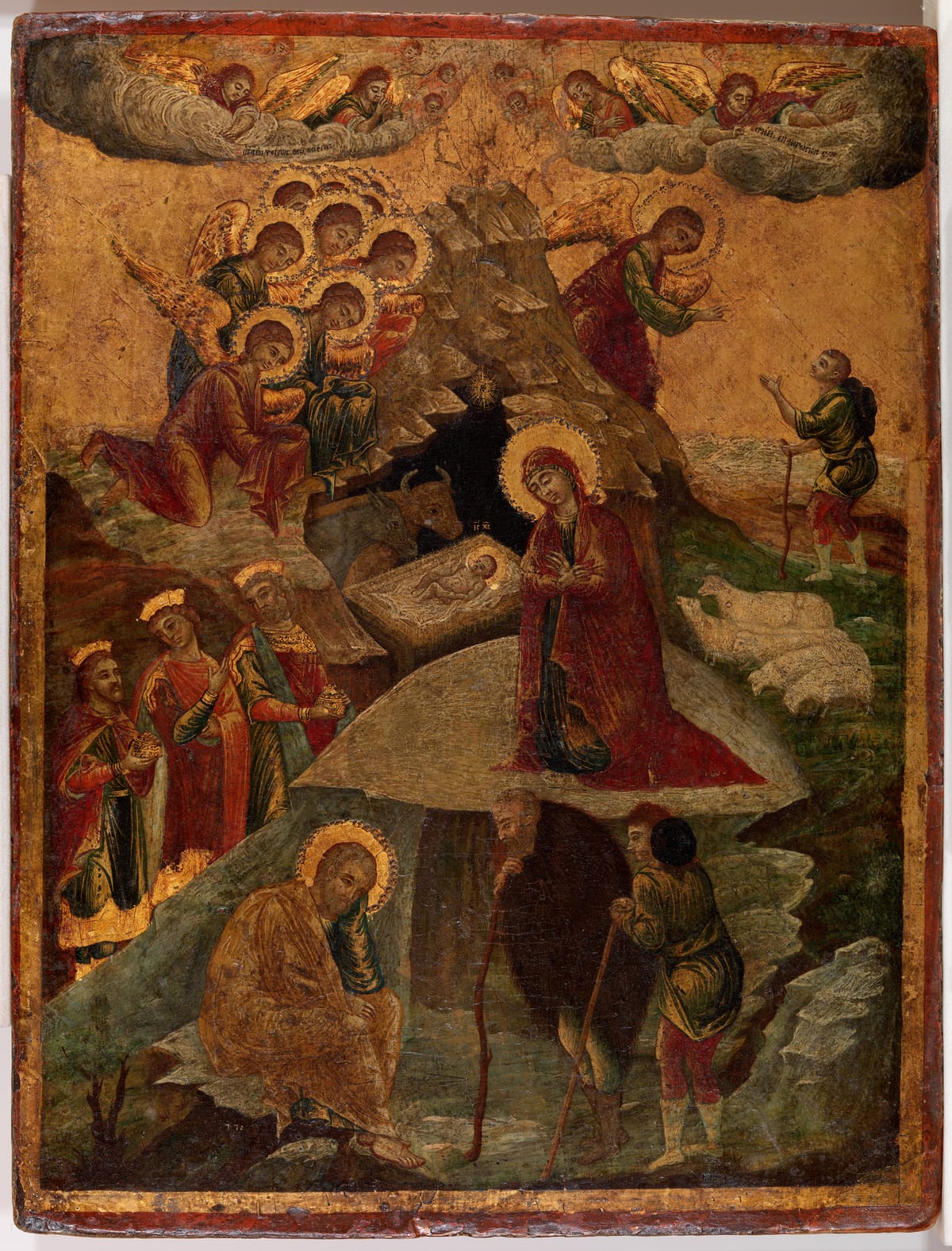
18 Now this is how the birth of Jesus Christ came about. When his mother Mary was betrothed to Joseph, but before they lived together, she was found with child through the holy Spirit.
19 Joseph her husband, since he was a righteous man, yet unwilling to expose her to shame, decided to divorce her quietly.
20 Such was his intention when, behold, the angel of the Lord appeared to him in a dream and said, “Joseph, son of David, do not be afraid to take Mary your wife into your home. For it is through the holy Spirit that this child has been conceived in her.
21 She will bear a son and you are to name him Jesus, because he will save his people from their sins.”
22 All this took place to fulfill what the Lord had said through the prophet:
23 “Behold, the virgin shall be with child and bear a son,
and they shall name him Emmanuel,”
which means “God is with us.”
24 When Joseph awoke, he did as the angel of the Lord had commanded him and took his wife into his home.
25 He had no relations with her until she bore a son, and he named him Jesus.
18 Christi autem generatio sic erat: cum esset desponsata mater ejus Maria Joseph, antequam convenirent inventa est in utero habens de Spiritu Sancto.
19 Joseph autem vir ejus cum esset justus, et nollet eam traducere, voluit occulte dimittere eam.
20 Hæc autem eo cogitante, ecce angelus Domini apparuit in somnis ei, dicens: Joseph, fili David, noli timere accipere Mariam conjugem tuam: quod enim in ea natum est, de Spiritu Sancto est.
21 Pariet autem filium: et vocabis nomen ejus Jesum: ipse enim salvum faciet populum suum a peccatis eorum.
22 Hoc autem totum factum est, ut adimpleretur quod dictum est a Domino per prophetam dicentem:
23 Ecce virgo in utero habebit, et pariet filium: et vocabunt nomen ejus Emmanuel, quod est interpretatum Nobiscum Deus.
24 Exsurgens autem Joseph a somno, fecit sicut præcepit ei angelus Domini, et accepit conjugem suam.
25 Et non cognoscebat eam donec peperit filium suum primogenitum: et vocavit nomen ejus Jesum.

A Daily Question from the Summa Theologica
Whether John’s baptism should have ceased after Christ was baptized? (Article 5 of 6 of Question 38. Of the Baptism of John from the Treatise on the Incarnation)
Objection 1: It would seem that John’s baptism should have ceased after Christ was baptized. For it is written (Jn. 1:31): “That He may be made manifest in Israel, therefore am I come baptizing in water.” But when Christ had been baptized, He was made sufficiently manifest, both by the testimony of John and by the dove coming down upon Him, and again by the voice of the Father bearing witness to Him. Therefore it seems that John’s baptism should not have endured thereafter.
Objection 2: Further, Augustine says (Super Joan., Tract. iv): “Christ was baptized, and John’s baptism ceased to avail.” Therefore it seems that, after Christ’s baptism, John should not have continued to baptize.
Objection 3: Further, John’s baptism prepared the way for Christ’s. But Christ’s baptism began as soon as He had been baptized; because “by the touch of His most pure flesh He endowed the waters with a regenerating virtue,” as Bede asserts (Mag. Sent. iv, 3). Therefore it seems that John’s baptism ceased when Christ had been baptized.
On the contrary, It is written (John 3:22, 23): “Jesus . . . came into the land of Judea . . . and baptized: and John also was baptizing.” But Christ did not baptize before being baptized. Therefore it seems that John continued to baptize after Christ had been baptized.
I answer that, It was not fitting for the baptism of John to cease when Christ had been baptized. First, because, as Chrysostom says (Hom. xxix in Joan.), “if John had ceased to baptize” when Christ had been baptized, “men would think that he was moved by jealousy or anger.” Secondly, if he had ceased to baptize when Christ baptized, “he would have given His disciples a motive for yet greater envy.” Thirdly, because, by continuing to baptize, “he sent his hearers to Christ” (Hom. xxix in Joan.). Fourthly, because, as Bede [*Scot. Erig. Comment. in Joan.] says, “there still remained a shadow of the Old Law: nor should the forerunner withdraw until the truth be made manifest.”
Reply to Objection 1: When Christ was baptized, He was not as yet fully manifested: consequently there was still need for John to continue baptizing.
Reply to Objection 2: The baptism of John ceased after Christ had been baptized, not immediately, but when the former was cast into prison. Thus Chrysostom says (Hom. xxix in Joan.): “I consider that John’s death was allowed to take place, and that Christ’s preaching began in a great measure after John had died, so that the undivided allegiance of the multitude was transferred to Christ, and there was no further motive for the divergence of opinions concerning both of them.”
Reply to Objection 3: John’s baptism prepared the way not only for Christ to be baptized, but also for others to approach to Christ’s baptism: and this did not take place as soon as Christ was baptized.
Continue reading the rest of the articles on Sacred Texts Archive website.
Scripture texts in this work are taken from the New American Bible, revised edition © 2010, 1991, 1986, 1970 Confraternity of Christian Doctrine, Washington, D.C.