Lenten Weekday
LITurgical Color: Violet
Rosary Mysteries: Luminous Mysteries

Daily Readings
Gospel: Matthew 7: 7-12
7 Ask, and it shall be given you: seek, and you shall find: knock, and it shall be opened to you.
8 For every one that asketh, receiveth: and he that seeketh, findeth: and to him that knocketh, it shall be opened.
9 Or what man is there among you, of whom if his son shall ask bread, will he reach him a stone?
10 Or if he shall ask him a fish, will he reach him a serpent?
11 If you then being evil, know how to give good gifts to your children: how much more will your Father who is in heaven, give good things to them that ask him?
12 All things therefore whatsoever you would that men should do to you, do you also to them. For this is the law and the prophets.
7 Petite, et dabitur vobis: quærite, et invenietis: pulsate, et aperietur vobis.
8 Omnis enim qui petit, accipit: et qui quærit, invenit: et pulsanti aperietur.
9 Aut quis est ex vobis homo, quem si petierit filius suus panem, numquid lapidem porriget ei?
10 aut si piscem petierit, numquid serpentem porriget ei?
11 Si ergo vos, cum sitis mali, nostis bona data dare filiis vestris: quanto magis Pater vester, qui in cælis est, dabit bona petentibus se?
12 Omnia ergo quæcumque vultis ut faciant vobis homines, et vos facite illis. Hæc est enim lex, et prophetæ.
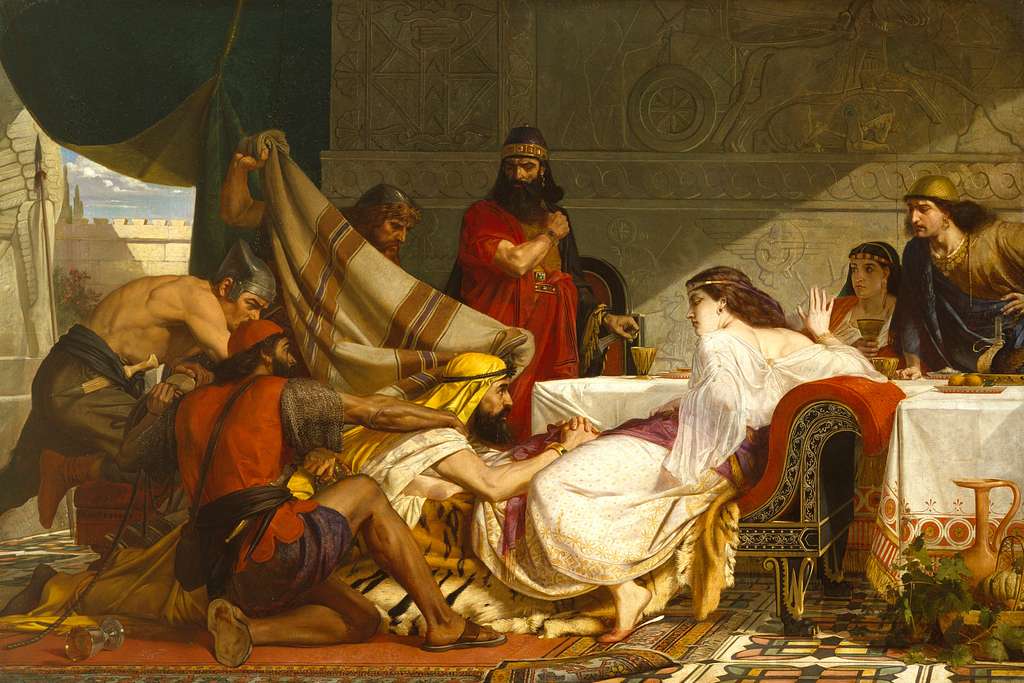
First Reading: Esther C:12, 14-16
12 And when Mardochai had heard this
14 For if thou wilt now hold thy peace, the Jews shall be delivered by some other occasion: and thou, and thy father’s house shall perish. And who knoweth whether thou art not therefore come to the kingdom, that thou mightest be ready in such a time as this?
15 And again Esther sent to Mardochai in these words:
16 Go, and gather together all the Jews whom thou shalt find in Susan, and pray ye for me. Neither eat nor drink for three days and three nights: and I with my handmaids will fast in like manner, and then I will go in to the king, against the law, not being called, and expose myself to death and to danger.
12 Quod cum audisset Mardochæus
14 si enim nunc silueris, per aliam occasionem liberabuntur Judæi: et tu, et domus patris tui, peribitis. Et quis novit utrum idcirco ad regnum veneris, ut in tali tempore parareris?
15 Rursumque Esther hæc Mardochæo verba mandavit:
16 Vade, et congrega omnes Judæos quos in Susan repereris, et orate pro me. Non comedatis et non bibatis tribus diebus et tribus noctibus: et ego cum ancillis meis similiter jejunabo, et tunc ingrediar ad regem contra legem faciens, non vocata, tradensque me morti et periculo.

A Daily Question from the Summa Theologica
Whether the Eucharist is one sacrament or several? (Article 2 of 6 of Question 73. Of the Sacrifice of the Eucharist from the Treatise on the Sacraments)
Objection 1: It seems that the Eucharist is not one sacrament but several, because it is said in the Collect [*Postcommunion “pro vivis et defunctis”]: “May the sacraments which we have received purify us, O Lord”: and this is said on account of our receiving the Eucharist. Consequently the Eucharist is not one sacrament but several.
Objection 2: Further, it is impossible for genera to be multiplied without the species being multiplied: thus it is impossible for one man to be many animals. But, as stated above (Q[60], A[1]), sign is the genus of sacrament. Since, then, there are more signs than one, to wit, bread and wine, it seems to follow that here must be more sacraments than one.
Objection 3: Further, this sacrament is perfected in the consecration of the matter, as stated above (A[1], ad 3). But in this sacrament there is a double consecration of the matter. Therefore, it is a twofold sacrament.
On the contrary, The Apostle says (1 Cor. 10:17): “For we, being many, are one bread, one body, all that partake of one bread”: from which it is clear that the Eucharist is the sacrament of the Church’s unity. But a sacrament bears the likeness of the reality whereof it is the sacrament. Therefore the Eucharist is one sacrament.
I answer that, As stated in Metaph. v, a thing is said to be one, not only from being indivisible, or continuous, but also when it is complete; thus we speak of one house, and one man. A thing is one in perfection, when it is complete through the presence of all that is needed for its end; as a man is complete by having all the members required for the operation of his soul, and a house by having all the parts needful for dwelling therein. And so this sacrament is said to be one. Because it is ordained for spiritual refreshment, which is conformed to corporeal refreshment. Now there are two things required for corporeal refreshment, namely, food, which is dry sustenance, and drink, which is wet sustenance. Consequently, two things concur for the integrity of this sacrament, to wit, spiritual food and spiritual drink, according to John: “My flesh is meat indeed, and My blood is drink indeed.” Therefore, this sacrament is materially many, but formally and perfectively one.
Reply to Objection 1: The same Collect at first employs the plural: “May the sacraments which we have received purify us”; and afterwards the singular number: “May this sacrament of Thine not make us worthy of punishment”: so as to show that this sacrament is in a measure several, yet simply one.
Reply to Objection 2: The bread and wine are materially several signs, yet formally and perfectively one, inasmuch as one refreshment is prepared therefrom.
Reply to Objection 3: From the double consecration of the matter no more can be gathered than that the sacrament is several materially, as stated above.
Continue reading the rest of the articles on Sacred Texts Archive website.