Day of Prayer for the Legal Protection of Unborn Children
Liturgical Color: White or Violet
Rosary Mysteries: Luminous Mysteries

Daily Readings
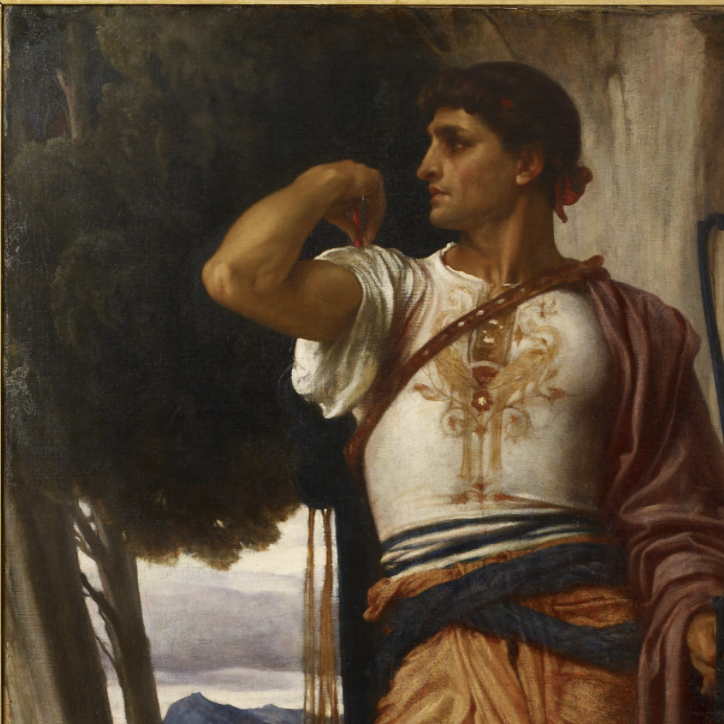
First Reading: 1 Samuel 18:6-9; 19:1-7
6 Now when David returned, after he slew the Philistine, the women came out of all the cities of Israel, singing and dancing, to meet king Saul, with timbrels of joy, and cornets.
7 And the women sung as they played, and they said: I Saul slew his thousands, and David his ten thousands.
8 And Saul was exceeding angry, and this word was displeasing in his eyes, and he said: They have given David ten thousands, and to me they have given but a thousand; what can he have more but the kingdom?
9 And Saul did not look on David with a good eye from that day and forward.
1 And Saul spoke to Jonathan his son and to all his servants, that they should kill David. But Jonathan the son of Saul loved David exceedingly.
2 And Jonathan told David, saying: Saul my father seeketh to kill thee: wherefore look to thyself, I beseech thee, in the morning, and thou shalt abide in a secret place and shalt be hid.
3 And I will go out and stand beside my father in the field where thou art: and I will speak of thee to my father, and whatsoever I shall see, I will tell thee.
4 And Jonathan spoke good things of David to Saul his father: and said to him: Sin not, O king, against thy servant, David, because he hath not sinned against thee, and his works are very good towards thee.
5 And he put his life in his hand, and slew the Philistine, and the Lord wrought great salvation for all Israel. Thou sawest it and didst rejoice. Why therefore wilt thou sin against innocent blood by killing David, who is without fault?
6 And when Saul heard this he was appeased with the words of Jonathan, and swore: As the Lord liveth he shall not be slain.
7 Then Jonathan called David and told him all these words: and Jonathan brought in David to Saul, and he was before him, as he had been yesterday and the day before.
6 Porro cum reverteretur percusso Philisthæo David, egressæ sunt mulieres de universis urbibus Israël, cantantes, chorosque ducentes in occursum Saul regis, in tympanis lætitiæ, et in sistris.
7 Et præcinebant mulieres, ludentes, atque dicentes: [Percussit Saul mille,
et David decem millia.]
8 Iratus est autem Saul nimis, et displicuit in oculis ejus sermo iste: dixitque: Dederunt David decem millia, et mihi mille dederunt: quid ei superest, nisi solum regnum?
9 Non rectis ergo oculis Saul aspiciebat David a die illa et deinceps.
1 Locutus est autem Saul ad Jonathan filium suum, et ad omnes servos suos, ut occiderent David. Porro Jonathas filius Saul diligebat David valde:
2 et indicavit Jonathas David, dicens: Quærit Saul pater meus occidere te: quapropter observa te, quæso, mane: et manebis clam, et absconderis.
3 Ego autem egrediens stabo juxta patrem meum in agro, ubicumque fueris: et ego loquar de te ad patrem meum, et quodcumque videro, nuntiabo tibi.
4 Locutus est ergo Jonathas de David bona ad Saul patrem suum: dixitque ad eum: Ne pecces rex in servum tuum David, quia non peccavit tibi, et opera ejus bona sunt tibi valde.
5 Et posuit animam suam in manu sua, et percussit Philisthæum, et fecit Dominus salutem magnam universo Israëli: vidisti, et lætatus es. Quare ergo peccas in sanguine innoxio, interficiens David, qui est absque culpa?
6 Quod cum audisset Saul, placatus voce Jonathæ, juravit: Vivit Dominus, quia non occidetur.
7 Vocavit itaque Jonathas David, et indicavit ei omnia verba hæc: et introduxit Jonathas David ad Saul, et fuit ante eum sicut fuerat heri et nudiustertius.
Gospel: Mark 3: 7-12
7 But Jesus retired with his disciples to the sea; and a great multitude followed him from Galilee and Judea,
8 And from Jerusalem, and from Idumea, and from beyond the Jordan. And they about Tyre and Sidon, a great multitude, hearing the things which he did, came to him.
9 And he spoke to his disciples that a small ship should wait on him because of the multitude, lest they should throng him.
10 For he healed many, so that they pressed upon him for to touch him, as many as had evils.
11 And the unclean spirits, when they saw him, fell down before him: and they cried, saying:
12 Thou art the Son of God. And he strictly charged them that they should not make him known.
7 Jesus autem cum discipulis suis secessit ad mare: et multa turba a Galilæa et Judæa secuta est eum,
8 et ab Jerosolymis, et ab Idumæa, et trans Jordanem: et qui circa Tyrum et Sidonem multitudo magna, audientes quæ faciebat, venerunt ad eum.
9 Et dicit discipulis suis ut navicula sibi deserviret propter turbam, ne comprimerent eum:
10 multos enim sanabat, ita ut irruerent in eum ut illum tangerent, quotquot habebant plagas.
11 Et spiritus immundi, cum illum videbant, procidebant ei: et clamabant, dicentes:
12 Tu es Filius Dei. Et vehementer comminabatur eis ne manifestarent illum.

A Daily Question from the Summa Theologica
Whether Christ should have preached to the Jews without offending them? (Article 2 of 4 of Question 42. Of Christ’s Doctrine from the Treatise on the Incarnation)
Objection 1: It would seem that Christ should have preached to the Jews without offending them. For, as Augustine says (De Agone Christ. xi): “In the Man Jesus Christ, a model of life is given us by the Son of God.” But we should avoid offending not only the faithful, but even unbelievers, according to 1 Cor. 10:32: “Be without offense to the Jews, and to the Gentiles, and to the Church of God.” Therefore it seems that, in His teaching, Christ should also have avoided giving offense to the Jews.
Objection 2: Further, no wise man should do anything that will hinder the result of his labor. Now through the disturbance which His teaching occasioned among the Jews, it was deprived of its results; for it is written (Luke 11:53, 54) that when our Lord reproved the Pharisees and Scribes, they “began vehemently to urge Him, end to oppress His mouth about many things; lying in wait for Him, and seeking to catch something from His mouth, that they might accuse Him.” It seems therefore unfitting that He should have given them offense by His teaching.
Objection 3: Further, the Apostle says (1 Tim. 5:1): “An ancient man rebuke not; but entreat him as a father.” But the priests and princes of the Jews were the elders of that people. Therefore it seems that they should not have been rebuked with severity.
On the contrary, It was foretold (Is. 8:14) that Christ would be “for a stone of stumbling and for a rock of offense to the two houses of Israel.”
I answer that, The salvation of the multitude is to be preferred to the peace of any individuals whatsoever. Consequently, when certain ones, by their perverseness, hinder the salvation of the multitude, the preacher and the teacher should not fear to offend those men, in order that he may insure the salvation of the multitude. Now the Scribes and Pharisees and the princes of the Jews were by their malice a considerable hindrance to the salvation of the people, both because they opposed themselves to Christ’s doctrine, which was the only way to salvation, and because their evil ways corrupted the morals of the people. For which reason our Lord, undeterred by their taking offense, publicly taught the truth which they hated, and condemned their vices. Hence we read (Matt. 15:12, 14) that when the disciples of our Lord said: “Dost Thou know that the Pharisees, when they heard this word, were scandalized?” He answered: “Let them alone: they are blind and leaders of the blind; and if the blind lead the blind, both fall into the pit.”
Reply to Objection 1: A man ought so to avoid giving offense, as neither by wrong deed or word to be the occasion of anyone’s downfall. “But if scandal arise from truth, the scandal should be borne rather than the truth be set aside,” as Gregory says (Hom. vii in Ezech.).
Reply to Objection 2: By publicly reproving the Scribes and Pharisees, Christ promoted rather than hindered the effect of His teaching. Because when the people came to know the vices of those men, they were less inclined to be prejudiced against Christ by hearing what was said of Him by the Scribes and Pharisees, who were ever withstanding His doctrine.
Reply to Objection 3: This saying of the Apostle is to be understood of those elders whose years are reckoned not only in age and authority, but also in probity; according to Num. 11:16: “Gather unto Me seventy men of the ancients of Israel, whom thou knowest to be ancients . . . of the people.” But if by sinning openly they turn the authority of their years into an instrument of wickedness, they should be rebuked openly and severely, as also Daniel says (Dan. 13:52): “O thou that art grown old in evil days,” etc.
Continue reading the rest of the articles on Sacred Texts Archive website.