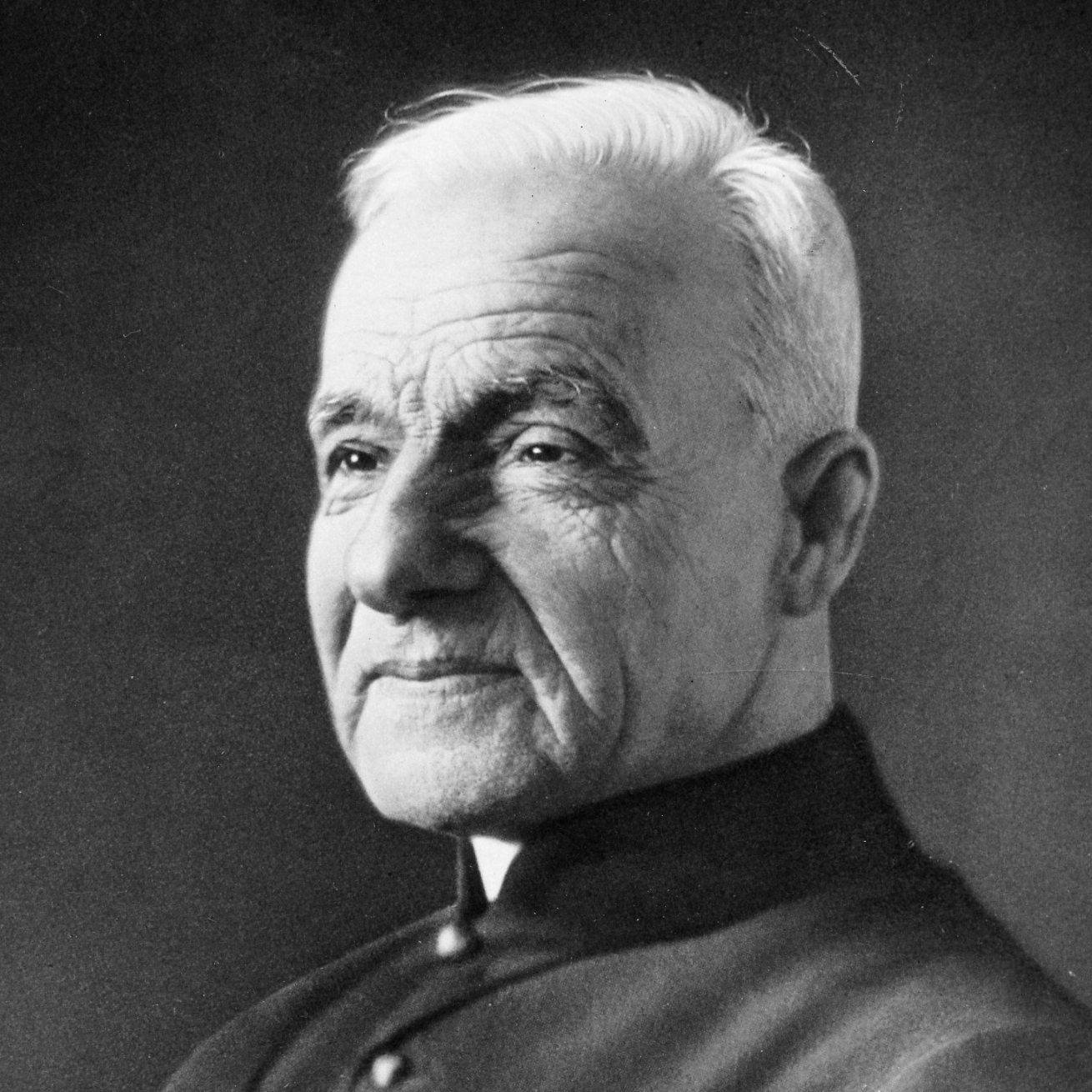
Optional Memorial of Saint André Bessette, Religious
Liturgical Color: White
Rosary Mysteries: Sorrowful Mysteries
“People who suffer have something to offer to God. When they succeed in enduring their suffering, that is a daily miracle.”
Saint André Bessette
August 9, 1845 – January 6, 1937
Patron of the sick, the disabled, the poor, and the marginalized/rejected

Daily Readings
First Reading: 1 John 4: 7-10
7 Dearly beloved, let us love one another, for charity is of God. And every one that loveth, is born of God, and knoweth God.
8 He that loveth not, knoweth not God: for God is charity.
9 By this hath the charity of God appeared towards us, because God hath sent his only begotten Son into the world, that we may live by him.
10 In this is charity: not as though we had loved God, but because he hath first loved us, and sent his Son to be a propitiation for our sins.
7 Carissimi, diligamus nos invicem: quia caritas ex Deo est. Et omnis qui diligit, ex Deo natus est, et cognoscit Deum.
8 Qui non diligit, non novit Deum: quoniam Deus caritas est.
9 In hoc apparuit caritas Dei in nobis, quoniam Filium suum unigenitum misit Deus in mundum, ut vivamus per eum.
10 In hoc est caritas: non quasi nos dilexerimus Deum, sed quoniam ipse prior dilexit nos, et misit Filium suum propitiationem pro peccatis nostris.
Gospel: Mark 6: 34-44
34 And Jesus going out saw a great multitude: and he had compassion on them, because they were as sheep not having a shepherd, and he began to teach them many things.
35 And when the day was now far spent, his disciples came to him, saying: This is a desert place, and the hour is now past:
36 Send them away, that going into the next villages and towns, they may buy themselves meat to eat.
37 And he answering said to them: Give you them to eat. And they said to him: Let us go and buy bread for two hundred pence, and we will give them to eat.
38 And he saith to them: How many loaves have you? go and see. And when they knew, they say: Five, and two fishes.
39 And he commanded them that they should make them all sit down by companies upon the green grass.
40 And they sat down in ranks, by hundreds and by fifties.
41 And when he had taken the five loaves, and the two fishes: looking up to heaven, he blessed, and broke the loaves, and gave to his disciples to set before them: and the two fishes he divided among them all.
42 And they all did eat, and had their fill.
43 And they took up the leavings, twelve full baskets of fragments, and of the fishes.
44 And they that did eat, were five thousand men.
34 Et exiens vidit turbam multam Jesus: et misertus est super eos, quia erant sicut oves non habentes pastorem, et cœpit docere multa.
35 Et cum jam hora multa fieret, accesserunt discipuli ejus, dicentes: Desertus est locus hic, et jam hora præteriit:
36 dimitte illos, ut euntes in proximas villas et vicos, emant sibi cibos, quos manducent.
37 Et respondens ait illis: Date illis vos manducare. Et dixerunt ei: Euntes emamus ducentis denariis panes, et dabimus illis manducare.
38 Et dicit eis: Quot panes habetis? ite, et videte. Et cum cognovissent, dicunt: Quinque, et duos pisces.
39 Et præcepit illis ut accumbere facerent omnes secundum contubernia super viride fœnum.
40 Et discubuerunt in partes per centenos et quinquagenos.
41 Et acceptis quinque panibus et duobus pisces, intuens in cælum, benedixit, et fregit panes, et dedit discipulis suis, ut ponerent ante eos: et duos pisces divisit omnibus.
42 Et manducaverunt omnes, et saturati sunt.
43 Et sustulerunt reliquias, fragmentorum duodecim cophinos plenos, et de piscibus.
44 Erant autem qui manducaverunt quinque millia virorum.

A Daily Question from the Summa Theologica
Whether it was fitting that the Mother of God should go to the temple to be purified? (Article 4 of 4 of Question 37. Of Christ’s Circumcision, and of the Other Legal Observances Accomplished in Regard to the Child Christ from the Treatise on the Incarnation)
Objection 1: It would seem that it was unfitting for the Mother of God to go to the Temple to be purified. For purification presupposes uncleanness. But there was no uncleanness in the Blessed Virgin, as stated above (QQ[27],28). Therefore she should not have gone to the Temple to be purified.
Objection 2: Further, it is written (Lev. 12:2-4): “If a woman, having received seed, shall bear a man-child, she shall be unclean seven days”; and consequently she is forbidden “to enter into the sanctuary until the days of her purification be fulfilled.” But the Blessed Virgin brought forth a male child without receiving the seed of man. Therefore she had no need to come to the Temple to be purified.
Objection 3: Further, purification from uncleanness is accomplished by grace alone. But the sacraments of the Old Law did not confer grace; rather, indeed, did she have the very Author of grace with her. Therefore it was not fitting that the Blessed Virgin should come to the Temple to be purified.
On the contrary is the authority of Scripture, where it is stated (Lk. 2:22) that “the days of” Mary’s “purification were accomplished according to the law of Moses.”
I answer that, As the fulness of grace flowed from Christ on to His Mother, so it was becoming that the mother should be like her Son in humility: for “God giveth grace to the humble,” as is written James 4:6. And therefore, just as Christ, though not subject to the Law, wished, nevertheless, to submit to circumcision and the other burdens of the Law, in order to give an example of humility and obedience; and in order to show His approval of the Law; and, again, in order to take away from the Jews an excuse for calumniating Him: for the same reasons He wished His Mother also to fulfil the prescriptions of the Law, to which, nevertheless, she was not subject.
Reply to Objection 1: Although the Blessed Virgin had no uncleanness, yet she wished to fulfil the observance of purification, not because she needed it, but on account of the precept of the Law. Thus the Evangelist says pointedly that the days of her purification “according to the Law” were accomplished; for she needed no purification in herself.
Reply to Objection 2: Moses seems to have chosen his words in order to exclude uncleanness from the Mother of God, who was with child “without receiving seed.” It is therefore clear that she was not bound to fulfil that precept, but fulfilled the observance of purification of her own accord, as stated above.
Reply to Objection 3: The sacraments of the Law did not cleanse from the uncleanness of sin which is accomplished by grace, but they foreshadowed this purification: for they cleansed by a kind of carnal purification, from the uncleanness of a certain irregularity, as stated in the FS, Q[102], A[5]; FS, Q[103], A[2]. But the Blessed Virgin contracted neither uncleanness, and consequently did not need to be purified.
Continue reading the rest of the articles on Sacred Texts Archive website.