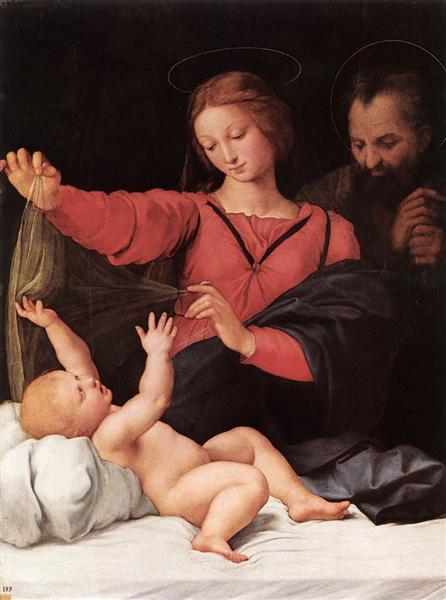
Optional Memorial of Our Lady of Loreto
Liturgical Color: Violet or White
Rosary Mysteries: Glorious Mysteries

Daily Readings
First Reading: Isaiah 40:25-31
25 To whom can you liken me as an equal?
says the Holy One.
26 Lift up your eyes on high
and see who created these:
He leads out their army and numbers them,
calling them all by name.
By his great might and the strength of his power
not one of them is missing!
27 Why, O Jacob, do you say,
and declare, O Israel,
“My way is hidden from the LORD,
and my right is disregarded by my God”?
28 Do you not know?
Have you not heard?
The LORD is God from of old,
creator of the ends of the earth.
He does not faint or grow weary,
and his knowledge is beyond scrutiny.
29 He gives power to the faint,
abundant strength to the weak.
30 Though young men faint and grow weary,
and youths stagger and fall,
31 They that hope in the LORD will renew their strength,
they will soar on eagles’ wings;
They will run and not grow weary,
walk and not grow faint.
25 Et cui assimilastis me, et adæquastis?
dicit Sanctus.
26 Levate in excelsum oculos vestros, et videte
quis creavit hæc:
qui educit in numero militiam eorum,
et omnes ex nomine vocat;
præ multitudine fortitudinis et roboris, virtutisque ejus,
neque unum reliquum fuit.
27 Quare dicis, Jacob,
et loqueris, Israël:
Abscondita est via mea a Domino,
et a Deo meo judicium meum transivit?
28 Numquid nescis, aut non audisti?
Deus sempiternus Dominus,
qui creavit terminos terræ:
non deficiet, neque laborabit,
nec est investigatio sapientiæ ejus.
29 Qui dat lasso virtutem,
et his qui non sunt, fortitudinem et robur multiplicat.
30 Deficient pueri, et laborabunt,
et juvenes in infirmitate cadent;
31 qui autem sperant in Domino mutabunt fortitudinem,
assument pennas sicut aquilæ:
current et non laborabunt,
ambulabunt et non deficient.]
Gospel: Matthew 11:28-30
The Gentle Mastery of Christ
28 “Come to me, all you who labor and are burdened, and I will give you rest.
29 Take my yoke upon you and learn from me, for I am meek and humble of heart; and you will find rest for yourselves.
30 For my yoke is easy, and my burden light.”
28 Venite ad me omnes qui laboratis, et onerati estis, et ego reficiam vos.
29 Tollite jugum meum super vos, et discite a me, quia mitis sum, et humilis corde: et invenietis requiem animabus vestris.
30 Jugum enim meum suave est, et onus meum leve.

A Daily Question from the Summa Theologica
Whether by being sanctified in the womb the Blessed Virgin was preserved from all actual sin? (Article 4 of 6 of Question 27. Of the Sanctification of the Blessed Virgin from the Treatise on the Incarnation)
Objection 1: It would seem that by being sanctified in the womb the Blessed Virgin was not preserved from all actual sin. For, as we have already stated (A[3]), after her first sanctification the fomes remained in the Virgin. Now the motion of the fomes, even if it precede the act of the reason, is a venial sin, albeit extremely slight, as Augustine says in his work De Trinitate [*Cf. Sent. ii, D, 24]. Therefore there was some venial sin in the Blessed Virgin.
Objection 2: Further, Augustine (Qq. Nov. et Vet. Test. lxxiii on Lk. 2:35: “Thy own soul a sword shall pierce”) says that the Blessed Virgin “was troubled with wondering doubt at the death of our Lord.” But doubt in matters of faith is a sin. Therefore the Blessed Virgin was not preserved from all actual sin.
Objection 3: Further, Chrysostom (Hom. xlv in Matth.) expounding the text: “Behold thy mother and thy brethren stand without, seeking thee,” says: “It is clear that they did this from mere vain glory.” Again, on Jn. 2:3: “They have no wine,” the same Chrysostom says that “she wished to do them a favor, and raise herself in their esteem, by means of her Son: and perchance she succumbed to human frailty, just as did His brethren when they said: ‘Manifest Thyself to the world.’” And a little further on he says: “For as yet she did not believe in Him as she ought.” Now it is quite clear that all this was sinful. Therefore the Blessed Virgin was not preserved from all sin.
On the contrary, Augustine says (De Nat. et Grat. xxxvi): “In the matter of sin, it is my wish to exclude absolutely all questions concerning the holy Virgin Mary, on account of the honor due to Christ. For since she conceived and brought forth Him who most certainly was guilty of no sin, we know that an abundance of grace was given her that she might be in every way the conqueror of sin.”
I answer that, God so prepares and endows those, whom He chooses for some particular office, that they are rendered capable of fulfilling it, according to 2 Cor. 3:6: “(Who) hath made us fit ministers of the New Testament.” Now the Blessed Virgin was chosen by God to be His Mother. Therefore there can be no doubt that God, by His grace, made her worthy of that office, according to the words spoken to her by the angel (Luke 1:30, 31): “Thou hast found grace with God: behold thou shalt conceive,” etc. But she would not have been worthy to be the Mother of God, if she had ever sinned. First, because the honor of the parents reflects on the child, according to Prov. 17:6: “The glory of children are their fathers”: and consequently, on the other hand, the Mother’s shame would have reflected on her Son. Secondly, because of the singular affinity between her and Christ, who took flesh from her: and it is written ( 2 Cor. 6:15): “What concord hath Christ with Belial?” Thirdly, because of the singular manner in which the Son of God, who is the “Divine Wisdom” (1 Cor. 1:24) dwelt in her, not only in her soul but in her womb. And it is written (Wis. 1:4): “Wisdom will not enter into a malicious soul, nor dwell in a body subject to sins.”
We must therefore confess simply that the Blessed Virgin committed no actual sin, neither mortal nor venial; so that what is written (Cant 4:7) is fulfilled: “Thou art all fair, O my love, and there is not a spot in thee,” etc.
Reply to Objection 1: After her sanctification the fomes remained in the Blessed Virgin, but fettered; lest she should be surprised by some sudden inordinate act, antecedent to the act of reason. And although the grace of her sanctification contributed to this effect, yet it did not suffice; for otherwise the result of her sanctification would have been to render impossible in her any sensual movement not preceded by an act of reason, and thus she would. not have had the fomes, which is contrary to what we have said above (A[3]). We must therefore say that the above mentioned fettering (of the fomes) was perfected by divine providence not permitting any inordinate motion to result from the fomes.
Reply to Objection 2: Origen (Hom. xvii in Luc.) and certain other doctors expound these words of Simeon as referring to the sorrow which she suffered at the time of our Lord’s Passion. Ambrose (in Luc. 2:35) says that the sword signifies “Mary’s prudence which took note of the heavenly mystery. For the word of God is living and effectual, and more piercing than any two-edged sword” (Heb. 4:12).
Others again take the sword to signify doubt. But this is to be understood of the doubt, not of unbelief, but of wonder and discussion. Thus Basil says (Ep. ad Optim.) that “the Blessed Virgin while standing by the cross, and observing every detail, after the message of Gabriel, and the ineffable knowledge of the Divine Conception, after that wondrous manifestation of miracles, was troubled in mind”: that is to say, on the one side seeing Him suffer such humiliation, and on the other considering His marvelous works.
Reply to Objection 3: In those words Chrysostom goes too far. They may, however, be explained as meaning that our Lord corrected in her, not the inordinate motion of vain glory in regard to herself, but that which might be in the thoughts of others.
Continue reading the rest of the articles on Sacred Texts Archive website.
Scripture texts in this work are taken from the New American Bible, revised edition © 2010, 1991, 1986, 1970 Confraternity of Christian Doctrine, Washington, D.C.