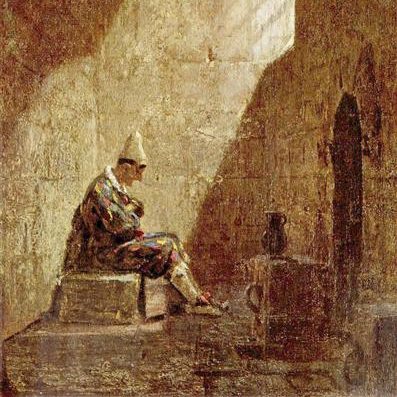
Ash Wednesday
LITurgical Color: Violet
Rosary Mysteries: Glorious Mysteries

Daily Readings
Gospel: Matthew 6: 1-6, 16-18
1 Take heed that you do not your justice before men, to be seen by them: otherwise you shall not have a reward of your Father who is in heaven.
2 Therefore when thou dost an alms-deed, sound not a trumpet before thee, as the hypocrites do in the synagogues and in the streets, that they may be honoured by men. Amen I say to you, they have received their reward.
3 But when thou dost alms, let not thy left hand know what thy right hand doth.
4 That thy alms may be in secret, and thy Father who seeth in secret will repay thee.
5 And when ye pray, you shall not be as the hypocrites, that love to stand and pray in the synagogues and corners of the streets, that they may be seen by men: Amen I say to you, they have received their reward.
6 But thou when thou shalt pray, enter into thy chamber, and having shut the door, pray to thy Father in secret, and thy father who seeth in secret will repay thee.
16 And when you fast, be not as the hypocrites, sad. For they disfigure their faces, that they may appear unto men to fast. Amen I say to you, they have received their reward.
17 But thou, when thou fastest anoint thy head, and wash thy face;
18 That thou appear not to men to fast, but to thy Father who is in secret: and thy Father who seeth in secret, will repay thee.
1 Attendite ne justitiam vestram faciatis coram hominibus, ut videamini ab eis: alioquin mercedem non habebitis apud Patrem vestrum qui in cælis est.
2 Cum ergo facis eleemosynam, noli tuba canere ante te, sicut hypocritæ faciunt in synagogis, et in vicis, ut honorificentur ab hominibus. Amen dico vobis, receperunt mercedem suam.
3 Te autem faciente eleemosynam, nesciat sinistra tua quid faciat dextera tua:
4 ut sit eleemosyna tua in abscondito, et Pater tuus, qui videt in abscondito, reddet tibi.
5 Et cum oratis, non eritis sicut hypocritæ qui amant in synagogis et in angulis platearum stantes orare, ut videantur ab hominibus: amen dico vobis, receperunt mercedem suam.
6 Tu autem cum oraveris, intra in cubiculum tuum, et clauso ostio, ora Patrem tuum in abscondito: et Pater tuus, qui videt in abscondito, reddet tibi.
16 Cum autem jejunatis, nolite fieri sicut hypocritæ, tristes. Exterminant enim facies suas, ut appareant hominibus jejunantes. Amen dico vobis, quia receperunt mercedem suam.
17 Tu autem, cum jejunas, unge caput tuum, et faciem tuam lava,
18 ne videaris hominibus jejunans, sed Patri tuo, qui est in abscondito: et Pater tuus, qui videt in abscondito, reddet tibi.
First Reading: Joel 2: 12-18
12 Now, therefore, saith the Lord. Be converted to me with all your heart, in fasting, and in weeping, and mourning.
13 And rend your hearts, and not your garments and turn to the Lord your God: for he is gracious and merciful, patient and rich in mercy, and ready to repent of the evil.
14 Who knoweth but he will return, and forgive, and leave a blessing behind him, sacrifice and libation to the Lord your God?
15 Blow the trumpet in Sion, sanctify a fast, call a solemn assembly,
16 Gather together the people, sanctify the church, assemble the ancients, gather together the little ones, and them that suck at the breasts: let the bridegroom go forth from his bed, and the bride out of her bridal chamber.
17 Between the porch and the altar the priests, the Lord’s ministers, shall weep, and shall say: Spare, O Lord, spare thy people: and give not thy inheritance to reproach, that the heathens should rule over them. Why should they say among the nations: Where is their God?
18 The Lord hath been zealous for his land, and hath spared his people.
12 Nunc ergo, dicit Dominus,
convertimini ad me in toto corde vestro,
in jejunio, et in fletu, et in planctu.
13 Et scindite corda vestra, et non vestimenta vestra;
et convertimini ad Dominum Deum vestrum,
quia benignus et misericors est,
patiens et multæ misericordiæ,
et præstabilis super malitia.
14 Quis scit si convertatur, et ignoscat,
et relinquat post se benedictionem, sacrificium et libamen Domino Deo vestro?
15 Canite tuba in Sion,
sanctificate jejunium, vocate cœtum:
16 congregate populum, sanctificate ecclesiam,
coadunate senes, congregate parvulos, et sugentes ubera;
egrediatur sponsus de cubili suo,
et sponsa de thalamo suo.
17 Inter vestibulum et altare plorabunt sacerdotes, ministri Domini,
et dicent: Parce, Domine, parce populo tuo;
et ne des hæreditatem tuam in opprobrium,
ut dominentur eis nationes.
Quare dicunt in populis: Ubi est Deus eorum?]
18 [Zelatus est Dominus terram suam,
et pepercit populo suo.
Second Reading: 2 Corinthians 5: 20-6:2
20 For Christ therefore we are ambassadors, God as it were exhorting by us, for Christ, we beseech you, be reconciled to God.
21 Him, who knew no sin, he hath made sin for us: that we might be made the justice of God in him.
1 And we helping do exhort you that you receive not the grace of God in vain.
2 For he saith: In an accepted time have I heard thee and in the day of salvation have I helped thee. Behold, now is the acceptable time: behold, now is the day of salvation.
20 Pro Christo ergo legatione fungimur, tamquam Deo exhortante per nos. Obsecramus pro Christo, reconciliamini Deo.
21 Eum, qui non noverat peccatum, pro nobis peccatum fecit, ut nos efficeremur justitia Dei in ipso.
1 Adjuvantes autem exhortamur ne in vacuum gratiam Dei recipiatis.
2 Ait enim: Tempore accepto exaudivi te, et in die salutis adjuvi te. Ecce nunc tempus acceptabile, ecce nunc dies salutis.

A Daily Question from the Summa Theologica
Whether Christ could communicate to ministers the power which He had in the sacraments? (Article 4 of 10 of Question 64. Of the Causes of the Sacraments from the Treatise on the Sacraments)
Objection 1: It seems that Christ could not communicate to ministers the power which He had in the sacraments. For as Augustine argues against Maximin, “if He could, but would not, He was jealous of His power.” But jealousy was far from Christ Who had the fulness of charity. Since, therefore, Christ did not communicate His power to ministers, it seems that He could not.
Objection 2: Further, on Jn. 14:12: “Greater than these shall he do,” Augustine says (Tract. lxxii): “I affirm this to be altogether greater,” namely, for a man from being ungodly to be made righteous, “than to create heaven and earth.” But Christ could not communicate to His disciples the power of creating heaven and earth: neither, therefore, could He give them the power of making the ungodly to be righteous. Since, therefore, the justification of the ungodly is effected by the power that Christ has in the sacraments, it seems that He could not communicate that power to ministers.
Objection 3: Further, it belongs to Christ as Head of the Church that grace should flow from Him to others, according to Jn. 1:16: “Of His fulness we all have received.” But this could not be communicated to others; since then the Church would be deformed, having many heads. Therefore it seems that Christ could not communicate His power to ministers.
On the contrary, on Jn. 1:31: “I knew Him not,” Augustine says (Tract. v) that “he did not know that our Lord having the authority of baptizing . . . would keep it to Himself.” But John would not have been in ignorance of this, if such a power were incommunicable. Therefore Christ could communicate His power to ministers.
I answer that, As stated above (A[3]), Christ had a twofold power in the sacraments. one was the power of “authority,” which belongs to Him as God: and this power He could not communicate to any creature; just as neither could He communicate the Divine Essence. The other was the power of “excellence,” which belongs to Him as man. This power He could communicate to ministers; namely, by giving them such a fulness of grace—that their merits would conduce to the sacramental effect—that by the invocation of their names, the sacraments would be sanctified—and that they themselves might institute sacraments, and by their mere will confer the sacramental effect without observing the sacramental rite. For a united instrument, the more powerful it is, is all the more able to lend its power to the separated instrument; as the hand can to a stick.
Reply to Objection 1: It was not through jealousy that Christ refrained from communicating to ministers His power of excellence, but for the good of the faithful; lest they should put their trust in men, and lest there should be various kinds of sacraments, giving rise to division in the Church; as may be seen in those who said: “I am of Paul, I am of Apollo, and I of Cephas” (1 Cor. 1:12).
Reply to Objection 2: This objection is true of the power of authority, which belongs to Christ as God. At the same time the power of excellence can be called authority in comparison to other ministers. Whence on 1 Cor. 1:13: “Is Christ divided?” the gloss says that “He could give power of authority in baptizing, to those to whom He gave the power of administering it.”
Reply to Objection 3: It was in order to avoid the incongruity of many heads in the Church, that Christ was unwilling to communicate to ministers His power of excellence. If, however, He had done so, He would have been Head in chief; the others in subjection to Him.
Continue reading the rest of the articles on Sacred Texts Archive website.